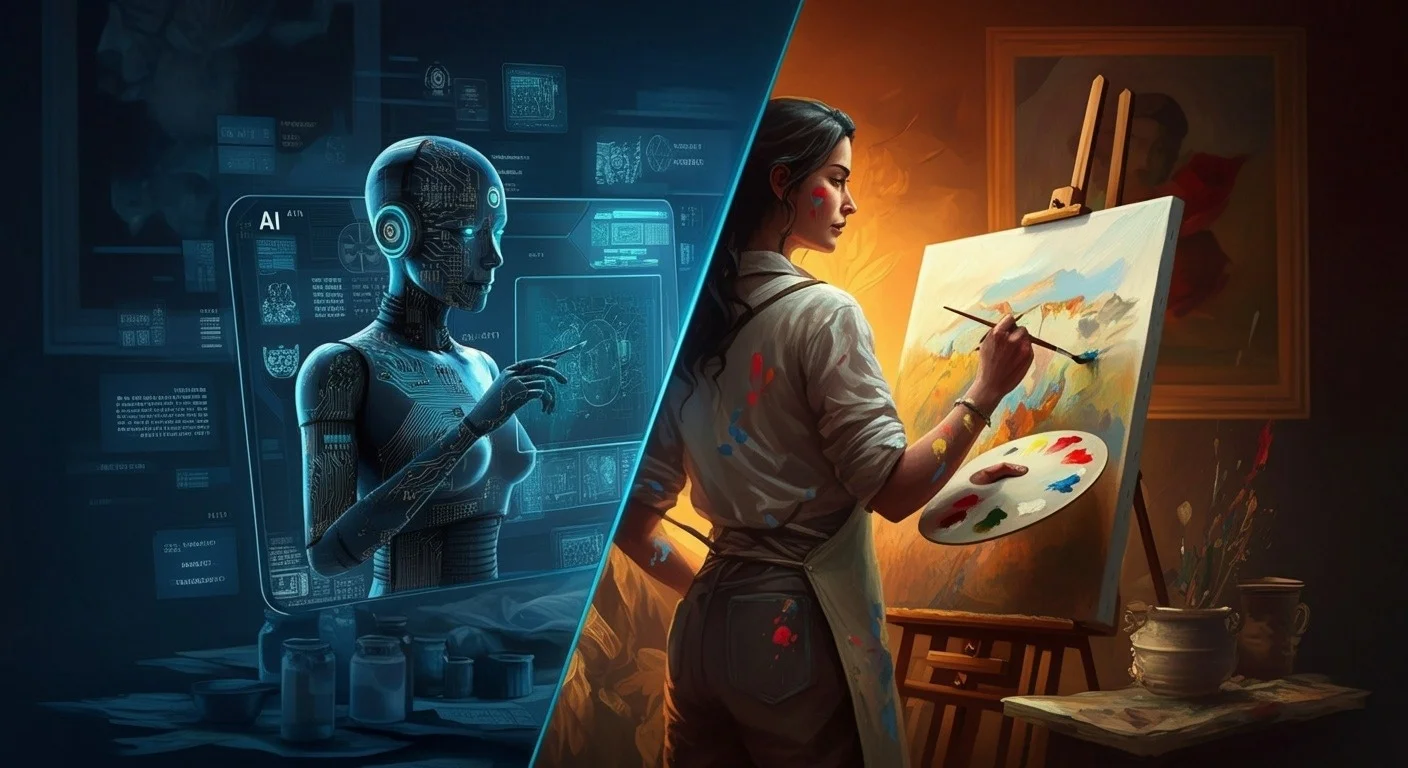

AI vs Human: Can Machines Be Artists?
The debate of AI vs human creativity is more relevant than ever. As artificial intelligence advances, machines are now capable of generating music, painting, writing, and even designing products. But can machines truly be considered artists, or are they simply tools amplifying human creativity? Understanding this distinction is critical for artists, technologists, and businesses looking to harness AI’s potential.
The Rise of AI in Artistic Creation
AI technology has progressed from simple automation to complex creative algorithms. Today, platforms can compose symphonies, generate realistic artwork, and even write poetry. Tools like Best AI Tools for Productivity demonstrate that AI can assist in brainstorming, refining ideas, and creating content that once required human intuition. By analyzing patterns in existing art, AI can mimic styles and innovate in unique ways.
AI in Visual Arts
Neural networks and deep learning models allow AI to create stunning visuals. These systems can replicate famous painting styles, generate digital art, and design product visuals. While AI can produce technically impressive work, critics argue that the lack of personal experience and emotional depth makes AI-generated art fundamentally different from human-created art.
AI in Music and Literature
From composing music to writing novels, AI has entered traditionally human-dominated domains. Music generation platforms can produce harmonies and melodies in seconds, while AI writing assistants, as discussed in How AI Is Transforming Digital Marketing, help marketers, authors, and content creators produce high-quality copy rapidly. However, human oversight is often necessary to maintain narrative coherence and emotional resonance.
Human Creativity: Irreplaceable and Contextual
Human creativity stems from personal experiences, emotions, and cultural context. Unlike AI, humans can create with intention, convey complex emotions, and conceptualize entirely new ideas. AI may replicate patterns, but it lacks consciousness and self-awareness. Projects like Future Gadgets to Watch show that while AI can enhance productivity, the human element remains central in innovation.
Collaboration Between AI and Humans
The future of art and creativity lies in collaboration. By combining AI’s computational power with human intuition, creators can achieve unprecedented results. For example, AI can generate variations of a design while humans choose the best options and add emotional nuance. This hybrid approach is reshaping industries like design, advertising, and entertainment.
AI in Business and Creative Industries
Businesses are increasingly leveraging AI for creative tasks. Startups highlighted in Top AI Startups in 2025 use AI to innovate in product design, marketing, and user experience. AI-driven analytics allow companies to predict trends, optimize visuals, and personalize content for audiences, providing a competitive edge without replacing human insight.
Marketing, Design, and Innovation
AI tools assist marketers in creating personalized campaigns, generating graphics, and optimizing advertisements. Designers use AI to produce prototypes faster, while content creators can explore new writing styles and ideas. The key is leveraging AI for efficiency and inspiration, while humans provide strategic direction and emotional storytelling.
Ethical Considerations of AI Creativity
As AI-generated art becomes more prevalent, ethical questions arise. Who owns an AI-created piece? Should AI-generated works be credited to the creator, programmer, or AI itself? Maintaining transparency, respecting copyright laws, and combining AI output with human contribution ensures ethical and responsible use of creative AI technologies.
Balancing AI and Human Input
To ethically use AI in creative fields:
- Clearly disclose AI involvement in projects.
- Combine AI suggestions with human judgment.
- Maintain originality by guiding AI outputs.
- Respect copyright and attribution laws.
- Stay informed about AI regulations in your field.
The Future of AI and Human Artists
AI will likely continue as a creative partner rather than a replacement. Human creativity enriched by AI can tackle complex challenges, explore new artistic styles, and optimize production workflows. Industries like digital art, music, gaming, and advertising benefit from this synergy. Embracing AI responsibly empowers creators to unlock new possibilities while maintaining the essence of human expression.
Practical Tips for Artists
- Experiment with AI-generated art to spark new ideas.
- Use AI tools to handle repetitive or technical tasks.
- Focus on storytelling, emotion, and context, where humans excel.
- Collaborate with other creators using AI tools.
- Stay updated on AI innovations in your industry.
Conclusion
The discussion of AI vs human creativity is not about replacement, but partnership. Machines can create impressive work, but human insight, emotion, and experience remain central. By collaborating with AI, artists and businesses can enhance productivity, explore new ideas, and push creative boundaries. The future of art lies in harnessing AI as a partner while preserving the unique qualities that only humans bring.