The hype cycle of 2024 promised us that by 2026, everyone would be wearing neural interfaces and directing movies from their bedrooms. Now that we are actually here, the reality is more nuanced—and frankly, more interesting.
Technology hasn’t magically turned everyone into a Spielberg. Instead, it has raised the “Quality Floor.” In January 2026, we are seeing that while technical barriers (like learning 3D modeling software) have vanished, the need for Human Taste is higher than ever. Tools like Generative Video and Spatial Computing aren’t replacing artists; they are exposing who actually has a vision and who was just good at using software.
In this analysis, we strip away the marketing buzz to look at how technology is actually enhancing creativity in the professional workspace today.
Table of Contents: The 2026 Creative Reality
1. The “Videomatic” Era: AI in Pre-Production
Contrary to the belief that AI would generate full blockbuster movies by 2026, its real impact has been in Pre-Production. Studios are using models like Sora and Runway not to replace the final camera shot, but to replace the storyboard.
The Shift from Sketch to Simulation
Previously, directors used rough pencil sketches to pitch ideas. Today, they generate high-fidelity “Videomatics” (moving visualizations). This allows lighting crews and set designers to see exactly what the director wants before they spend money on a physical set. Technology is enhancing creativity by reducing the “Translation Error” between a director’s brain and the crew’s execution.
2. Spatial Computing: Moving Beyond the 2D Screen
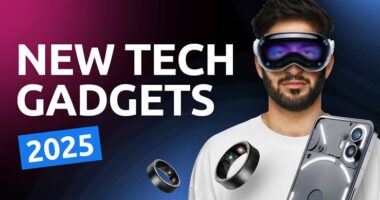
With the maturation of the Apple Vision ecosystem and competitors like Samsung XR, we are seeing a migration of 3D designers away from flat monitors.
Sculpting in Air
Automotive and product designers are now using “Passthrough AR” to view digital prototypes sitting on their physical desks. This isn’t just a gimmick; it allows creators to judge scale and ergonomics instantly. . By removing the abstraction of a 2D mouse and keyboard, technology has made digital creation feel as intuitive as physical sculpting.
A fascinating trend in 2026 is the consumer fatigue with “Perfectly Polished” AI content. Because AI can generate flawless, symmetrical images instantly, “Perfection” has become cheap.
The Return of Grit
We are observing a rise in creative choices that deliberately include “flaws”—film grain, handheld camera shake, and unpolished vocal takes. Musicians and filmmakers are using technology to add texture, not remove it. The role of the artist in 2026 is to inject the “Human Error” that algorithms are trained to eliminate. Value has shifted from “High Fidelity” to “High Authenticity.”
4. Hardware Check: What Pros Are Actually Using
While “Neural Wristbands” capture headlines, they remain a niche tool for early adopters. The standard kit for a 2026 creative professional is more grounded:
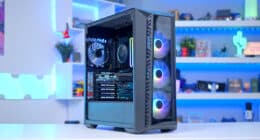
- Local Compute Units: High-VRAM workstations (NVIDIA 50-series) are essential to run AI models locally for privacy.
- Haptic Controllers: Precision tools that provide physical feedback are preferred over “air gestures” for detailed work like digital painting.
- Voice-First Interfaces: Designers are increasingly talking to their software (“Make that blue darker”) while working with their hands.
5. Conclusion: The Curator Economy
Technology in 2026 hasn’t made creativity easier; it has made it faster. This speed forces every creator to become an Editor. When you can generate 100 variations of a logo in a minute, your skill is no longer “making the logo”—it is “choosing the right one.”
The artists thriving in this era are those with a strong foundation in art history, theory, and culture. Technology provides the engine, but human taste remains the steering wheel.