
VR Worlds Growing Very Realistic
Table of Contents
- The Great Convergence: Achieving Photorealism in Virtual Spaces
- Foveated Rendering and Micro-OLED: The Visual Breakthroughs of 2025
- AI-Powered Procedural Generation: Creating Infinite, Dynamic Realities
- Advanced Haptics: Feeling the Virtual World through Tactile Feedback
- Spatial Audio and Sensory Fusion: The Sound of Presence
- The Rise of Intelligent NPCs: Social Realism Through Generative AI
- Physics Engines and Environmental Interaction: Real-World Consequences
- Photorealistic Avatars and the Future of Digital Identity
- Hardware Evolution: From Bulky Headsets to All-Day Wearables
- Conclusion: The Tipping Point of Digital and Physical Reality
The Great Convergence: Achieving Photorealism in Virtual Spaces
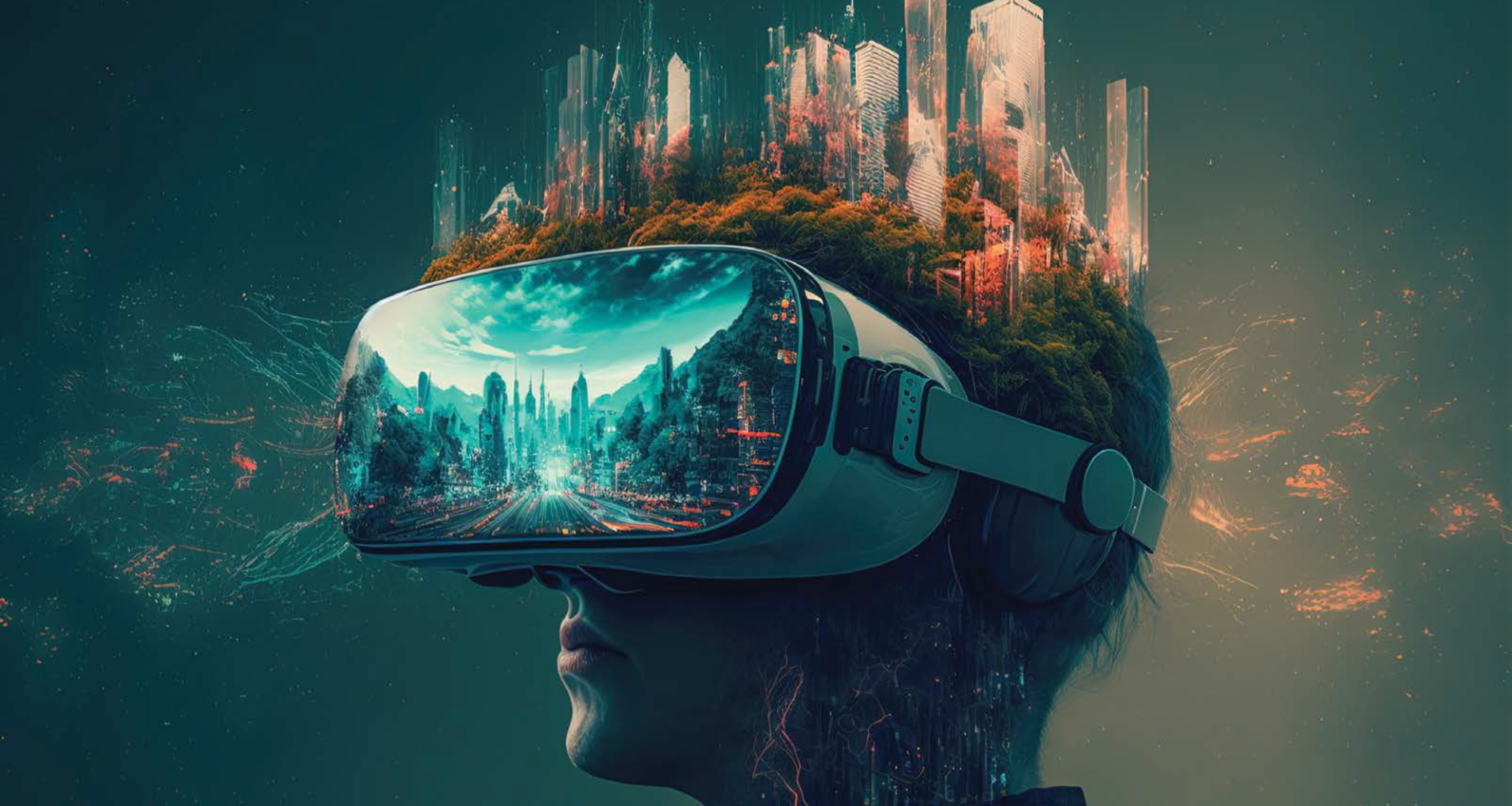
The quest for realism in Virtual Reality (VR) has reached a pivotal threshold in 2025, moving beyond stylized, “cartoonish” graphics toward a state of genuine photorealism. This transformation is driven by a convergence of high-performance computing, sophisticated rendering algorithms, and a deeper understanding of human perception. In previous years, VR environments were often limited by hardware constraints that necessitated lower polygon counts and simplified lighting. However, the current generation of VR worlds leverages real-time ray tracing and global illumination, allowing light to bounce, reflect, and refract within virtual spaces exactly as it does in the physical world. This ensures that materials like polished marble, brushed aluminum, and transparent glass look and behave with staggering authenticity, eliminating the “uncanny valley” effect that previously hindered deep immersion.
This leap in realism is not merely about aesthetic beauty; it is about cognitive presence. When the visual inputs provided by a headset perfectly match the brain’s expectations of light, shadow, and perspective, the user stops perceiving the experience as a simulation and begins to accept it as a reality. This “Great Convergence” of technology is being applied across diverse sectors, from ultra-realistic flight simulators for pilot training to virtual real estate tours where every texture of a home can be inspected with microscopic detail. As we head into 2026, the standard for a VR world is no longer “good enough for a game,” but rather “indistinguishable from a photograph,” marking a fundamental shift in how we interact with digital dimensions.
Foveated Rendering and Micro-OLED: The Visual Breakthroughs of 2025
The technical backbone of today’s hyper-realistic VR lies in two specific hardware breakthroughs: **Foveated Rendering** and **Micro-OLED displays**. Foveated rendering is a revolutionary technique that uses high-speed eye-tracking sensors to detect exactly where a user is looking within the headset. The system then concentrates its massive processing power only on that specific focal point, rendering it in extreme detail while subtly blurring the peripheral areas. This mimics the way human vision actually works—our eyes only see high detail in the central fovea—allowing developers to deliver photorealistic 4K or even 8K visuals without requiring the astronomical computing power typically needed to render an entire 360-degree scene at that quality.
Complementing this is the shift to Micro-OLED technology. Unlike traditional LCD screens used in older headsets, Micro-OLED panels offer nearly infinite contrast ratios and perfect blacks because each pixel produces its own light. This eliminates the “screen door effect” (where users could see the gaps between pixels) and provides a level of clarity and color vibrance that rivals the natural world. These displays, combined with light-field technology that allows eyes to focus naturally on near and far objects, eliminate the eye strain and “flatness” associated with earlier VR. Together, these technologies provide the visual fidelity necessary to make virtual worlds feel truly solid and present, bridging the final gap in optical realism.
AI-Powered Procedural Generation: Creating Infinite, Dynamic Realities
Artificial Intelligence (AI) has become the primary architect of realistic VR worlds, solving the problem of “empty” or “repetitive” environments through **AI-powered procedural generation**. Historically, creating a highly detailed VR world required years of manual labor by thousands of 3D artists. Today, generative AI models can take high-level prompts and instantly build vast, coherent, and microscopically detailed landscapes—from sprawling urban centers where every building has a unique interior to dense forests where every leaf reacts to a simulated breeze. This allows for the creation of infinite realities that feel “lived-in” and authentic, rather than static and pre-packaged.
Crucially, these environments are no longer just large; they are dynamic. AI algorithms ensure that these worlds evolve based on user interactions and time. If a user walks through a virtual field, the grass stays trampled; if they leave an object in a room, it remains there across sessions. This persistence is a key pillar of realism. Furthermore, AI optimizes the backend performance of these massive worlds in real-time, ensuring that as a user moves through a high-fidelity environment, the system intelligently allocates resources to maintain a seamless, lag-free experience. The integration of AI means that VR worlds are no longer just places we visit, but complex, evolving ecosystems that simulate the entropy and unpredictability of the real world.
Advanced Haptics: Feeling the Virtual World through Tactile Feedback
The evolution of realism in VR has moved decisively beyond the visual and into the tactile realm through **Advanced Haptic Feedback**. In 2025, the standard VR experience has transitioned from simple vibrating controllers to sophisticated haptic wearables, including gloves and full-body suits equipped with micro-actuators and ultrasonic transducers. These devices allow users to “feel” the virtual world with high precision—sensing the gentle resistance of a virtual button, the weight of a digital object, or the distinct textures of different surfaces like rough stone versus smooth silk.
State-of-the-art haptic gloves, such as those used in enterprise training and high-end gaming, utilize force-feedback technology to physically stop a user’s fingers when they “grasp” a virtual object, providing a convincing sensation of solidity and shape. Some advanced systems even incorporate thermal haptics, allowing users to feel the warmth of a virtual fire or the chill of digital ice. This sensory expansion is vital for “hand-eye” realism; when your brain sees a solid object and your hands feel its weight and texture, the illusion of reality is almost impossible to break. This tactile layer is transforming high-stakes training, such as surgery or hazardous material handling, where the sense of touch is just as important as sight for successful outcomes.
Spatial Audio and Sensory Fusion: The Sound of Presence
Realism in VR is deeply dependent on **Spatial Audio**, a technology that mimics how sound behaves in a three-dimensional physical space. In a realistic VR world, sound is no longer just “left” or “right”; it is anchored to specific coordinates in the environment. If a virtual bird chirps behind you, the sound reflects off the virtual walls and attenuates with distance, changing dynamically as you turn your head. Modern spatial audio engines, such as those utilizing the MPEG-I immersive audio standard, simulate occlusion (sound being blocked by objects) and reverb (sound bouncing off different materials), providing a level of auditory immersion that is indistinguishable from reality.
The true power of this realism comes from **sensory fusion**—the seamless synchronization of sight, sound, and touch. For example, if a user in a VR world taps a virtual wooden table, they see the finger hit the surface, they feel a sharp tactile “click” in their glove, and they hear a hollow wooden “thud” that appears to originate exactly from the point of impact. This cross-modal consistency is what builds the perception of “presence.” By perfectly aligning these sensory inputs, VR developers can trick the human brain into a state of total immersion, making the virtual environment feel as logically consistent and “real” as the room the user is physically standing in.
One of the final hurdles to achieving “total realism” in VR has been the presence of Non-Player Characters (NPCs). In the past, these characters were limited to rigid, pre-programmed scripts, often breaking the immersion with repetitive dialogue and mechanical movements. In 2025, the integration of **Large Language Models (LLMs) and Generative AI** has introduced “Social Realism” to VR. Modern NPCs are now capable of natural, unscripted conversations, reacting to the user’s voice, gestures, and even emotional tone in real-time. This transforms them from static puppets into intelligent digital inhabitants of the virtual world.
This realism extends to physical behavior as well. AI-driven animation engines allow NPCs to exhibit fluid, natural body language and facial expressions that are contextually appropriate. If a user approaches an NPC aggressively, the character might take a defensive posture or show fear in their eyes; if a user is helpful, the NPC might smile and offer more detailed information. This emotional intelligence makes social interactions in VR feel authentic and meaningful, which is essential for the growth of social VR platforms and collaborative virtual workspaces. When the “people” you meet in a virtual world behave with the complexity and unpredictability of real humans, the sense of being in a “real” place is profoundly reinforced.
Physics Engines and Environmental Interaction: Real-World Consequences
A realistic world is one that obeys the laws of physics, and the latest VR environments are powered by advanced **Physics Engines** that simulate weight, gravity, friction, and fluid dynamics with extreme accuracy. In 2025, environmental interaction in VR has reached a point where every object has mass and properties. If you throw a virtual glass bottle against a wall, it doesn’t just disappear; it shatters into unique fragments based on the force and angle of the impact. Fluids flow realistically around obstacles, and fire spreads across flammable materials following mathematical models of heat transfer.
This level of physical realism is crucial for “consequential interaction.” In older VR, the world often felt like a “look-but-don’t-touch” museum. In modern realistic VR, the user can manipulate almost anything, and the world reacts in a logically consistent way. This is particularly transformative for industrial design and engineering, where virtual prototypes can be tested under simulated physical stress before a single physical part is manufactured. By ensuring that the virtual world has “consequences” that mirror the physical world, developers create a sense of grounded reality that makes the experience far more engaging and useful for practical applications.
Photorealistic Avatars and the Future of Digital Identity
The realism of the user’s own presence in VR is just as important as the realism of the environment. The move toward **Photorealistic Avatars** is a major trend in 2025, driven by sophisticated motion-capture and 3D Gaussian rendering. Using a simple smartphone scan, users can now create a digital twin of themselves that captures their exact facial features, skin textures, and even the way they move. These avatars utilize eye-tracking and mouth-tracking sensors inside the headset to mirror the user’s real-life expressions in real-time, allowing for “face-to-face” communication in VR that feels truly personal.
This leap in avatar realism is essential for the future of remote work and social interaction. When you can see the subtle nuances of a colleague’s expression or the genuine smile of a friend across the globe, the psychological distance of the internet evaporates. The “uncanny valley” of avatars is being bridged by AI-powered skin and muscle simulations that ensure expressions look natural rather than robotic. As digital identity becomes more realistic, the virtual world becomes a more viable space for high-stakes meetings, therapy, and deep social connection, making the digital “you” as convincing and expressive as the physical “you.”
Hardware Evolution: From Bulky Headsets to All-Day Wearables
The realism of a virtual experience is often hindered by the physical discomfort of wearing a heavy, tethered device. Therefore, the **Hardware Evolution** toward lighter, wireless, and more ergonomic headsets is a critical component of the growing realism in VR. In 2025, the industry has seen the arrival of high-performance standalone headsets that pack the power of a desktop PC into a form factor similar to a pair of ski goggles. These devices utilize high-bandwidth wireless protocols like Wi-Fi 7 to eliminate cables, allowing for true “free-roam” immersion where users can physically walk through vast virtual worlds without fear of tripping or being pulled back.
Beyond weight reduction, improvements in thermal management and battery life mean that users can remain in these realistic worlds for hours at a time without discomfort or “VR sickness.” The integration of “Pass-through” or Mixed Reality (MR) features also allows users to seamlessly blend their physical environment with the virtual one, further grounding the experience. As hardware becomes more “invisible”—feeling less like a machine strapped to the face and more like a natural extension of the user’s senses—the psychological barrier to entry drops, and the realism of the virtual world becomes the primary focus. This move toward all-day comfort is the final step in making VR a fundamental, daily layer of human experience.
Conclusion: The Tipping Point of Digital and Physical Reality
Virtual Reality in 2025 has reached a historic tipping point where the “virtual” is becoming indistinguishable from the “real.” This growth in realism is not the result of a single breakthrough, but rather the harmonious integration of photorealistic visuals, AI-driven intelligence, and multi-sensory feedback systems. When we can see, hear, and feel a digital world that obeys the laws of physics and contains intelligent inhabitants, the concept of a “simulation” begins to dissolve. We are moving toward a future where VR is not just a tool for entertainment or training, but a parallel reality that offers genuine experiences, emotional connections, and practical utility. As the technology continues to mature into 2026, the realism of VR worlds will continue to expand, fundamentally redefining the boundaries of human presence, creativity, and the very nature of what we consider to be “real.”
References
VR Trends: AI & Photorealism (Zero Latency) |
Hyper-Realistic VR Environments (Mazerspace) |
Sensory Expansion in 2025 VR (INAIR)