
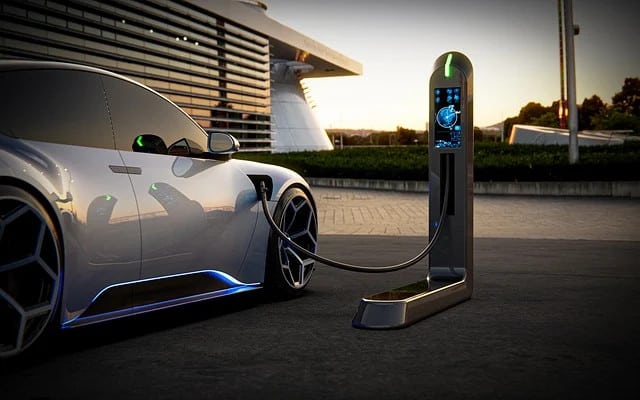

EV Tech Improving at Rapid Speed
Table of Contents
- The Acceleration Point: Why EV Tech is Surging in 2025
- Solid-State and Beyond: The New Frontier of Battery Chemistry
- The Megawatt Era: Redefining Charging Speeds and 1000V Architectures
- Software-Defined Vehicles (SDV): The Car as a Living Digital Platform
- Artificial Intelligence in the Cockpit: From Assistants to Road Sensing
- Wireless and Dynamic Charging: Cutting the Cord for Good
- Powertrain Efficiency: Silicon Carbide Inverters and Axial Flux Motors
- Vehicle-to-Everything (V2X): The EV as a Mobile Power Plant
- Circular Economy and Sustainability: The Greening of the Supply Chain
- Conclusion: The Unstoppable Transition to an Electrified Future
The Acceleration Point: Why EV Tech is Surging in 2025
The global automotive industry has reached a decisive inflection point where the rate of technological advancement in electric vehicles (EVs) is now outpacing traditional internal combustion development by a significant margin. As of late 2025, the narrative has shifted from whether EVs are viable to how quickly they can completely redefine our concept of mobility. This rapid acceleration is fueled by a massive influx of capital, intense competition between legacy automakers and agile tech-first manufacturers, and a global regulatory landscape that has made electrification the only path forward for the mass market. What was considered “cutting-edge” just two years ago is now becoming baseline entry-level technology, as engineers solve long-standing hurdles related to energy density, charging infrastructure, and manufacturing scale.
This surge is not limited to a single component but is a holistic transformation of the vehicle’s “central nervous system.” We are witnessing a convergence of chemistry, software, and electrical engineering that allows vehicles to be more efficient, safer, and more integrated into our digital lives. The transition is particularly visible in the rapid maturation of supply chains, where the cost of battery cells continues to drop while their performance metrics rise. This creates a virtuous cycle where better technology leads to higher adoption, which in turn drives the economies of scale necessary to fund the next generation of research and development. In this era, the “rapid speed” of improvement is not just a marketing phrase; it is a measurable reality reflected in every new model launch reaching the market today.
Solid-State and Beyond: The New Frontier of Battery Chemistry
The battery remains the heart of the electric revolution, and the shift from traditional liquid-electrolyte lithium-ion cells to **Solid-State Batteries (SSB)** is the most significant leap in energy storage technology in decades. By replacing the flammable liquid electrolyte with a solid ceramic or polymer material, manufacturers are achieving energy densities that were previously thought impossible. In 2025, we are seeing the first pilot production runs of these batteries in high-end performance vehicles and long-range luxury sedans. These batteries offer a dual benefit: they are inherently safer due to their non-flammable nature and can store significantly more energy in a smaller, lighter footprint, effectively ending the era of “range anxiety” for the average consumer.
While solid-state technology captures the headlines, the improvement in established chemistries like **Lithium Iron Phosphate (LFP)** is equally transformative for the mass market. The latest generation of LFP batteries has achieved such high charging rates—reaching up to 12C—that they can be recharged from empty to near-full in under ten minutes. This makes EVs accessible to people who do not have dedicated home charging, as the “refueling” experience now mimics the speed of a traditional petrol station visit. Furthermore, the removal of expensive and ethically sensitive materials like cobalt and nickel from many of these new battery formulas is making the technology more sustainable and less susceptible to the volatility of global commodity markets, ensuring that the downward price trend for EVs remains consistent through 2026 and beyond.
The Megawatt Era: Redefining Charging Speeds and 1000V Architectures
Charging technology is undergoing a fundamental upgrade from the standard 400-volt systems to high-performance **800-volt and even 1000-volt architectures**. This doubling of system voltage is the key to unlocking ultra-fast charging speeds without generating excessive heat that could degrade the battery. By operating at a higher voltage, the vehicle can accept more power with lower current, allowing for thinner, lighter wiring within the car and faster energy transfer at the plug. For the user, this means that a quick five-minute stop at a highway charging hub can now provide enough energy for 400 kilometers of driving, fundamentally changing the feasibility of long-distance electric travel.
The emergence of the **Megawatt Charging System (MCS)** is another game-changer, particularly for the heavy-duty transport and commercial sectors. While passenger cars are pushing toward 400 kW charging, electric trucks and buses are now beginning to utilize chargers that can deliver over 1,000 kW (1 megawatt) of power. This capability ensures that a massive semi-truck can be fully recharged during a driver’s mandatory rest break, proving that electrification is not just for small city cars but for the entire logistics backbone of the global economy. As these high-power hubs become more common along major transport corridors, the convenience of EV ownership is reaching parity with—and in some ways exceeding—that of traditional fossil-fuel vehicles.
Software-Defined Vehicles (SDV): The Car as a Living Digital Platform
One of the most profound shifts in EV technology is the transition to the **Software-Defined Vehicle (SDV)**. Historically, a car’s capabilities were fixed at the moment it left the factory; any improvements required a physical visit to a mechanic. Today, modern EVs are built on a “software-first” architecture where the hardware is a flexible platform that can be continuously updated over-the-air (OTA). This allows manufacturers to improve everything from motor efficiency and battery management to autonomous driving features and infotainment systems remotely. A car purchased in 2025 will literally become better, faster, and more efficient as it ages, provided the manufacturer continues to push software optimizations to its fleet.
This shift is made possible by a move toward **zonal E/E (electrical/electronic) architectures**. Instead of having dozens of small, isolated computers controlling different parts of the car, the SDV uses a few powerful central processors that manage entire sections of the vehicle. This reduces the amount of heavy copper wiring needed, lowering the vehicle’s weight and increasing its range. Moreover, this centralized control allows for much deeper integration between systems. For example, the car can use navigation data to pre-condition the battery for optimal charging speed as it approaches a station, or it can adjust the suspension in real-time based on upcoming road data gathered from other vehicles in the network. The car is no longer a static machine; it is a dynamic, evolving digital product.
Artificial Intelligence in the Cockpit: From Assistants to Road Sensing
Artificial Intelligence is playing a massive role in the rapid improvement of the EV user experience, moving far beyond simple voice commands. In 2025, AI is being used for **predictive maintenance**, where the car’s onboard systems monitor the health of every component in real-time, predicting potential failures before they happen and scheduling service appointments automatically. In the cockpit, Generative AI provides a truly conversational interface that understands context, allowing drivers to manage complex tasks like planning a multi-stop road trip with charging stops optimized for their preferred coffee shops or scenic routes, all through natural dialogue.
More importantly, AI is enhancing the safety and efficiency of the driving experience through features like **AI Road Sense**. By using a suite of cameras, Lidar, and ultrasonic sensors, the vehicle’s AI can “see” the road surface up to 25 meters ahead and adjust the damping, braking force, and torque distribution in milliseconds to ensure maximum comfort and safety. This level of environmental awareness also contributes to the steady progress of autonomous driving systems, which are becoming more reliable as AI models are trained on billions of miles of real-world driving data. As these systems mature, the EV becomes not just a mode of transport, but a highly intelligent assistant that actively works to make every journey safer and more enjoyable.
Wireless and Dynamic Charging: Cutting the Cord for Good
The “rapid speed” of EV tech improvement is also visible in the push to eliminate physical charging cables entirely. **Wireless EV charging** is moving from the laboratory to the driveway in 2025, with several luxury and mainstream brands offering factory-installed wireless pads as an option. These systems use magnetic resonance to transfer energy from a ground-based pad to a receiver on the vehicle’s undercarriage with efficiency levels that now rival traditional plug-in chargers. This technology removes the last bit of friction from the EV experience; a driver simply parks in their garage or a designated spot at the mall, and the car begins to charge automatically, requiring zero physical effort from the user.
Even more ambitious is the development of **dynamic wireless charging**, or “electrified roads.” Pilot projects in Europe and Asia are testing highways equipped with embedded charging coils that can transfer energy to vehicles as they drive over them at highway speeds. While still in the early stages of wide-scale deployment, this technology has the potential to drastically reduce the size of the battery needed in an EV, as the car could be powered directly by the road during long-haul trips. By decoupling the vehicle’s range from its battery size, dynamic charging could lead to lighter, cheaper, and more efficient electric vehicles, representing the ultimate solution to the challenges of long-distance mobility.
Powertrain Efficiency: Silicon Carbide Inverters and Axial Flux Motors
While much of the public focus is on batteries and screens, some of the most impressive improvements are happening in the hidden parts of the powertrain, specifically the **inverters and motors**. The industry is rapidly switching to **Silicon Carbide (SiC) inverters**, which are much more efficient at converting the battery’s direct current (DC) into the alternating current (AC) needed by the motors. SiC power electronics can handle higher voltages and temperatures with much lower energy loss compared to traditional silicon-based components. This small change in material science results in a significant increase in overall vehicle range—sometimes as much as five to ten percent—without changing the battery at all.
Simultaneously, motor technology is evolving with the rise of **Axial Flux motors**. These motors are smaller, lighter, and offer much higher torque density than the radial flux motors used in most current EVs. Their compact “pancake” shape allows them to be integrated directly into the wheels or into smaller spaces within the chassis, providing designers with more freedom to maximize interior cabin space. Furthermore, the industry is making great strides in developing high-efficiency motors that do not rely on rare-earth magnets, reducing the environmental impact and cost associated with mining. These refinements in the powertrain ensure that every watt of energy stored in the battery is used as effectively as possible, driving the relentless improvement in EV performance and value.
Vehicle-to-Everything (V2X): The EV as a Mobile Power Plant
The concept of the electric vehicle is expanding beyond transportation as **Vehicle-to-Everything (V2X)** technology becomes standardized. With bidirectional charging capabilities, an EV is no longer just a consumer of energy but a critical part of the energy grid. **Vehicle-to-Home (V2H)** allows a car to act as a backup battery for a house during power outages, potentially powering essential appliances for days. Similarly, **Vehicle-to-Grid (V2G)** allows utility companies to draw small amounts of power from millions of parked EVs during peak demand periods, helping to stabilize the grid and incorporate more renewable energy sources like wind and solar.
For the consumer, this turns their vehicle into a financial asset. In many regions, EV owners can now participate in energy markets, selling power back to the grid when prices are high and charging when prices are low or when there is an excess of renewable energy. This “smart charging” ecosystem is supported by advanced software that ensures the car is always charged and ready when the driver needs it, while also maximizing the financial and environmental benefits of the stored energy. By transforming the EV into a mobile power plant, technology is creating a more resilient and sustainable energy future for everyone, far beyond the scope of just driving.
Circular Economy and Sustainability: The Greening of the Supply Chain
As the volume of EVs on the road grows, the technology for **battery recycling and sustainable manufacturing** is improving at a similarly rapid pace. In 2025, we are seeing the emergence of a “closed-loop” battery economy where nearly 95 percent of the valuable metals in an old EV battery—including lithium, copper, and aluminum—can be recovered and used to build new cells. This drastically reduces the need for new mining operations and lowers the overall carbon footprint of EV production. Manufacturers are also increasingly using recycled plastics and sustainable fabrics for vehicle interiors, aligning the product’s physical materials with its zero-emission mission.
The innovation also extends to the “second-life” applications of batteries. Even when a battery has degraded enough that it is no longer ideal for a high-performance vehicle, it still retains significant capacity for less demanding tasks. These “retired” EV batteries are now being repurposed for large-scale **Battery Energy Storage Systems (BESS)** used by data centers, hospitals, and renewable energy farms. This extends the useful life of the battery by a decade or more, ensuring that the energy and resources used to create it provide the maximum possible benefit to society. This holistic approach to sustainability is proving that the electric transition is not just about replacing an engine with a motor, but about redesigning the entire lifecycle of industrial products.
Conclusion: The Unstoppable Transition to an Electrified Future
The rapid speed of EV tech improvement has created a world where the electric vehicle is now the clear superior in performance, efficiency, and intelligence. The convergence of solid-state battery chemistry, megawatt-speed charging, and software-defined architectures has addressed nearly every historical barrier to adoption. As we look toward 2026, the EV is no longer a niche choice for the environmentally conscious but the logical choice for every driver who values a safer, more convenient, and more connected mobility experience. The industry’s ability to innovate across chemistry, software, and hardware simultaneously has ensured that the transition to electrification is not just happening—it is accelerating beyond all expectations. We are entering an era where the car is a living part of our digital and energy ecosystems, marking the most significant revolution in personal transportation since the first Ford Model T rolled off the assembly line over a century ago.
References
Global EV Outlook 2025 (BloombergNEF) |
EV Charging Innovations of 2026 (Bolt.Earth) |
State of Solid-State Battery Tech (EVXL)