
Smart Cities Expanding Everywhere
Table of Contents
- The Cognitive Metropolis: Smart Cities as Living Organisms
- Digital Twins: Virtual Replicas for Predictive Urban Management
- The 15-Minute City: Redesigning Urban Proximity and Livability
- Smart Mobility 2.0: Integrating Autonomous Fleets and Micro-mobility
- Energy Communities and Smart Grids: The Green Power Revolution
- Climate Resilience: Sensor-Driven Disaster Prevention and Response
- Digital Citizenship: GovTech and Inclusive Civic Engagement
- Health-Centric Urbanism: Monitoring Air, Noise, and Wellness
- The Emerging Market Surge: Smart Initiatives in Developing Megacities
- Conclusion: The Ethics of Connectivity and the Future of Urban Life
The Cognitive Metropolis: Smart Cities as Living Organisms
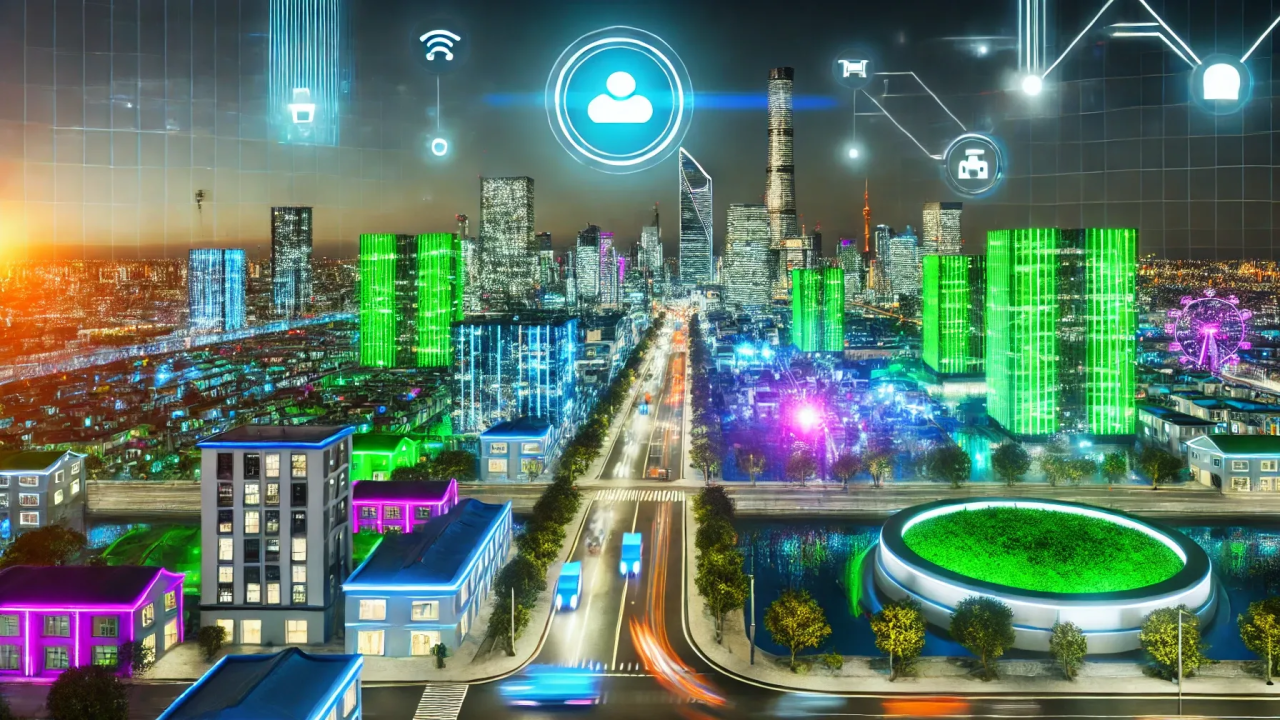
As we navigate through the final weeks of 2025, the concept of the “Smart City” has transcended its origins as a mere collection of disconnected gadgets. We have entered the era of the Cognitive Metropolis, where cities function less like static grids and more like living organisms. Powered by the Artificial Intelligence of Things (AIoT), these urban centers possess a central nervous system capable of sensing, processing, and responding to data in real-time. By the end of this year, the global smart cities market has surpassed a staggering valuation of $2.25 trillion, driven by a desperate need for efficiency in the face of rapid urbanization. Today, a smart city is defined by its ability to anticipate the needs of its residents, utilizing predictive algorithms to balance energy loads, optimize traffic flow, and ensure public safety before a single citizen even leaves their home.
The expansion is no longer limited to high-tech hubs like Singapore or Dubai. Small and medium-sized municipalities are rapidly adopting “off-the-shelf” smart solutions, proving that digital transformation is a necessity rather than a luxury. This democratization is fueled by the widespread rollout of 5G and early 6G trials, which provide the low-latency backbone required for thousands of sensors to communicate simultaneously. In 2026, we expect to see the number of globally recognized smart cities increase by more than 50 percent, as urban planners move away from isolated pilot projects toward integrated, city-wide ecosystems. The focus has shifted from “technology for technology’s sake” to “technology for humanity,” ensuring that the modern city is resilient, sustainable, and, above all, responsive to the people who inhabit it.
Digital Twins: Virtual Replicas for Predictive Urban Management
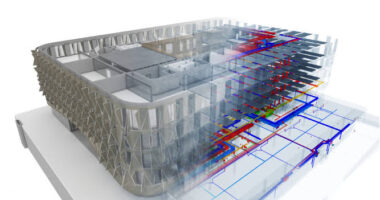
One of the most transformative technologies in urban planning today is the Digital Twin—a highly detailed virtual replica of a physical city that is updated in real-time by IoT sensors. In 2025, cities like London and Shanghai are using these twins to simulate everything from climate change impacts to the traffic effects of a new subway line. By testing scenarios in a digital sandbox first, city officials can avoid costly mistakes and optimize infrastructure investments. These models are now being overlaid with immersive technologies like Augmented Reality (AR), allowing planners to “walk through” a future neighborhood and see how shadows from new skyscrapers will affect park sunlight or how noise pollution will bounce off different building materials.
The true power of the Digital Twin lies in its predictive capabilities. Instead of reacting to a water main break or a power outage, AI-driven twins analyze historical data and sensor inputs to forecast when a piece of infrastructure is likely to fail. This shift toward predictive maintenance is reducing urban downtime and extending the lifespan of critical assets by 20 to 30 percent. Furthermore, during extreme weather events, which are becoming more frequent, these virtual models allow emergency responders to run “what-if” simulations, identifying which streets will flood first and how to most efficiently evacuate high-risk zones. The Digital Twin has become the brain of the smart city, turning vast oceans of raw data into a clear, actionable roadmap for a more stable urban future.
The 15-Minute City: Redesigning Urban Proximity and Livability
The “15-minute city” concept—where all essential services like healthcare, education, groceries, and work are accessible within a 15-minute walk or bike ride—has become the gold standard for urban design in 2025. This movement is a direct response to the environmental and mental health tolls of long commutes. Smart cities are using data analytics to identify “service deserts” and strategically place new developments to create hyper-local, self-sufficient neighborhoods. By reducing the need for cars, cities are not only lowering their carbon footprints but also reclaiming urban space for parks, plazas, and pedestrian walkways, effectively turning concrete jungles back into human-centric environments.
Technology is the hidden enabler of this proximity. Smart zoning tools analyze population density and movement patterns to suggest where a new community clinic or co-working space would have the most impact. Additionally, digital platforms allow residents to access many essential services—such as government permits or non-emergency healthcare—remotely, further reducing the physical travel required to live a full life. As we look toward 2026, the 15-minute city is evolving into the “5-minute neighborhood” in some ultra-dense areas, prioritizing micro-mobility and local social cohesion. This redesign is proving that the future of the smart city is not found in more highways, but in the intelligent compression of space to bring people closer to the things they value most.
Smart Mobility 2.0: Integrating Autonomous Fleets and Micro-mobility
Urban transport has undergone a total reimagining, moving away from private vehicle ownership toward “Mobility as a Service” (MaaS). In 2025, 75 percent of traffic management systems in leading smart cities are powered by AI, which adjusts traffic lights in real-time based on actual congestion levels rather than static timers. This has led to a 30 percent reduction in traffic jams and a significant drop in idling emissions. At the same time, we are seeing the first commercial deployments of autonomous shuttles and “robo-taxis” that fill the gaps in traditional public transport, providing a seamless “last-mile” connection from train stations to front doors.
Micro-mobility—including e-bikes and e-scooters—has been fully integrated into the city’s digital infrastructure. Smart charging docks are now as common as streetlights, and unified transit apps allow commuters to book and pay for a multi-modal trip—starting on a bus, transferring to a train, and finishing on a scooter—with a single click. This level of integration is essential for managing the sheer volume of people moving through megacities. By prioritizing public and shared transit over the private car, smart cities are effectively “de-clogging” their arteries, creating a smoother, faster, and much safer mobility experience that treats transportation as a unified, data-driven utility rather than a series of disconnected hurdles.
Energy Communities and Smart Grids: The Green Power Revolution
The transition to renewable energy is the cornerstone of the 2025 smart city expansion. Traditional centralized power plants are being supplemented—and in some cases replaced—by decentralized “Energy Communities.” These are clusters of buildings equipped with solar panels and smart storage systems that can share excess power with each other. In Spain and Northern Europe, new regulations have accelerated the growth of these micro-grids, allowing neighborhoods to achieve collective energy savings of over 30 percent. Smart grids use AI to balance supply and demand with millisecond precision, automatically drawing power from electric vehicle batteries during peak times and recharging them when wind or solar production is at its highest.
Sustainability is also being built into the very fabric of the city through smart lighting and green architecture. Streetlights now use motion sensors to dim when no one is around, while buildings are outfitted with “smart skins” that adjust their insulation and transparency based on the sun’s position. These innovations are not just about saving money; they are about energy security in an increasingly volatile world. By diversifying their energy sources and using data to eliminate waste, smart cities are becoming more self-reliant and resilient. The future of urban power is localized, intelligent, and entirely carbon-neutral, proving that the tech-driven city is the planet’s best hope for meeting ambitious climate targets by 2030.
Climate Resilience: Sensor-Driven Disaster Prevention and Response
As climate change leads to more extreme weather events, smart cities are prioritizing resilience as a core design principle. In 2025, IoT-enabled flood monitoring systems have become standard in coastal and riverfront cities. These systems use ultrasonic sensors to track water levels and AI to predict which streets will be submerged, automatically triggering flood barriers and rerouting traffic before the water even reaches the pavement. In drought-prone areas, smart water management systems detect leaks in the distribution network with pinpoint accuracy, preventing the loss of billions of gallons of precious fresh water every year.
This resilience extends to public safety and emergency response. In the smart city of 2026, 60 percent of urban security and emergency systems will be interconnected, allowing fire departments and medical teams to see real-time “heat maps” of a disaster zone. Drones are now deployed automatically to provide aerial footage and search-and-rescue support long before human responders can reach the scene. By turning the city into a hyper-aware environment, we are significantly reducing the human and economic cost of natural disasters. A smart city doesn’t just survive a storm; it uses data to weather it, adapting its infrastructure and resources in real-time to protect its most vulnerable citizens.
Digital Citizenship: GovTech and Inclusive Civic Engagement
The relationship between the city and the citizen is being redefined through “GovTech”—the use of technology to make government services more accessible and transparent. In 2025, digital identity systems allow residents to securely vote, pay taxes, and access health records through a single, unified app. This has effectively eliminated the “bureaucratic friction” that often plagues urban life. More importantly, these platforms are being used to foster “participatory planning.” Residents can now use their smartphones to vote on how local budgets should be spent or to report infrastructure issues like potholes and broken lights, with the AI automatically assigning a repair crew and providing the citizen with a real-time status update.
However, the expansion of smart cities has also brought the challenge of “digital inclusion” to the forefront. Leaders in 2026 are focused on ensuring that these digital services are accessible to everyone, regardless of age, income, or technical ability. This includes the rollout of free municipal Wi-Fi, digital literacy programs, and the design of “invisible” smart services that don’t require a smartphone to function—such as smart crosswalks that detect a slow-moving pedestrian and extend the crossing time automatically. By making the city more “conversational” and responsive to direct feedback, GovTech is rebuilding the trust between the people and the state, turning urban dwellers from passive residents into active stakeholders in their city’s future.
Health-Centric Urbanism: Monitoring Air, Noise, and Wellness
Post-2025 urban planning has taken a decisive turn toward “Health-Centric Urbanism.” Smart cities are now blanketed with environmental sensors that monitor air quality, noise pollution, and pollen levels in real-time. This data is not just for scientists; it is pushed directly to residents’ devices, allowing a parent with an asthmatic child to choose a walking route with the cleanest air. In cities like Copenhagen and Singapore, these sensors are integrated into “wellness corridors”—green spaces designed to reduce the “urban heat island” effect and provide residents with areas for physical activity and mental relaxation.
Telehealth is also being woven into the urban fabric. Smart kiosks in public squares and “health-aware” homes allow for routine check-ups and remote diagnostics, reducing the burden on physical hospitals. AI-driven systems analyze anonymized health data to identify potential disease outbreaks or “hotspots” of chronic illness, allowing city health departments to deploy preventative resources where they are needed most. By prioritizing the biological and psychological well-being of the population, the smart city is evolving into a proactive healthcare provider. The goal is a “healing city,” where the environment itself works to keep you healthy, rather than just treating you once you are sick.
The Emerging Market Surge: Smart Initiatives in Developing Megacities
While Western cities often dominate the headlines, the most explosive growth in smart city technology is occurring in emerging markets across Asia, Africa, and Latin America. Megacities like Lagos, Jakarta, and Ho Chi Minh City are using smart technology to “leapfrog” traditional infrastructure hurdles. In these regions, the focus is on basic but life-altering solutions: smart trash bins that alert collectors when they are full to prevent sanitation crises, and mobile-based water payment systems that ensure equitable access to clean resources. The population of African cities is set to double by 2050, and smart technology is the only way these urban areas can remain functional under such immense pressure.
In 2025, “intermediary cities”—those with populations between 500,000 and 1 million—are becoming the new laboratories for smart innovation in the Global South. These cities are more agile than megacities, allowing them to test integrated IoT deployments for traffic and waste management at a lower cost. International partnerships and “Green Financing” are providing the capital for these projects, recognizing that the global battle against climate change will be won or lost in the rapidly growing cities of the developing world. The expansion of smart cities is now a truly global phenomenon, proving that data-driven governance is a universal tool for improving human dignity and opportunity, regardless of a nation’s starting wealth.
Conclusion: The Ethics of Connectivity and the Future of Urban Life
In conclusion, the expansion of smart cities in 2025 and 2026 represents a fundamental shift in how humanity organizes itself. By turning our urban environments into intelligent, data-driven ecosystems, we are solving some of the most persistent challenges of the modern era—from traffic congestion and energy waste to climate vulnerability and bureaucratic inefficiency. However, as we integrate technology more deeply into our lives, the focus must remain on the ethics of connectivity. Protecting data privacy, ensuring cybersecurity, and preventing a “digital divide” are the essential guardrails that will determine if the smart city is a utopia or a surveillance state. The most successful cities of the future will not be those with the most sensors, but those that use their technical power to foster a more inclusive, healthy, and vibrant human community.
As we look toward the next decade, the “Smart City” will simply become the “City.” The technologies we now view as revolutionary—autonomous transit, digital twins, and AI-governance—will become the invisible, expected background of urban life. The stage is set for a new golden age of urbanism, where the efficiency of the machine serves the creativity and connection of the human spirit. The journey from a collection of “smart things” to a “cognitive home for millions” is nearly complete, and the cities we are building today will stand as a testament to our ability to innovate in harmony with the planet and each other.
References
Smart City Trends Reshaping Urban Life in 2025 (Bernard Marr) |
Smart Cities Market Size and Global Forecast 2034 (Precedence Research) |
5 Key Smart City Trends Expected in 2025 (Tomorrow.City)