
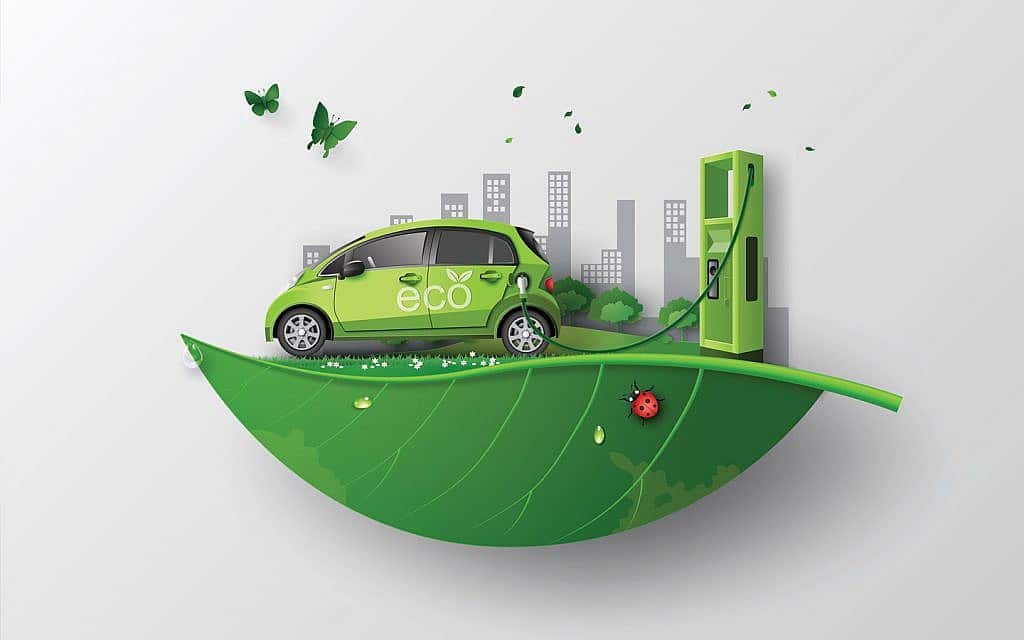

The Future of Electric Vehicles and Green Energy: Synergy for 2026
Table of Contents
- Introduction
- Solid-State Batteries: The 2026 Commercial Turning Point
- V2G and V2H: Turning EVs into Mobile Power Stations
- AI and Smart Grid Integration: Optimizing Every Watt
- Renewable-Powered Charging: Solar Roads and Stations
- The Backbone of Growth: Fleet-Driven Electrification
- Circular Economy: Battery Passports and Sustainable Recycling
- The Co-existence of Green Hydrogen and Battery Tech
- Global Policy Impacts: Pushing the Carbon-Neutral Agenda
- The 2026 Consumer: Affordability and Range Confidence
- Conclusion
Introduction
As we navigate the landscape of late 2025 and head into 2026, the transition toward a carbon-neutral world has found its most powerful engine in the convergence of electric mobility and green energy. The era of seeing electric vehicles as separate from the power grid is ending; instead, we are entering a phase where EVs are the very infrastructure that makes a renewable-heavy grid possible. In 2026, the global focus has shifted from mere production volume to the intelligent execution of energy ecosystems. Technological maturity in battery chemistry, coupled with AI-driven energy orchestration, is allowing humanity to finally decouple economic growth from fossil fuel consumption. This article explores the critical innovations and strategic shifts that define the relationship between EVs and green energy in 2026, providing a roadmap for a future where clean transportation is the standard rather than the exception.
Solid-State Batteries: The 2026 Commercial Turning Point
The year 2026 marks a pivotal moment for battery science with the first commercial deployments of solid-state batteries (SSBs) in premium EVs. Unlike current lithium-ion batteries that use liquid electrolytes, SSBs utilize solid materials, offering 40-50% higher energy density and drastically reduced fire risks. Manufacturers like Dongfeng and Stellantis have set 2026 as the target for their first SSB-powered fleets, promising ranges that comfortably exceed 600 miles. This is a significant leap forward in biotechnology advances 2025 as materials science increasingly relies on bio-engineered and molecularly designed components to enhance conductivity. These batteries also support ultra-fast charging, with some systems adding 280 miles of range in just five minutes. The arrival of SSBs is effectively ending “range anxiety” and making EVs more competitive with traditional vehicles than ever before.
V2G and V2H: Turning EVs into Mobile Power Stations
By 2026, Vehicle-to-Grid (V2G) and Vehicle-to-Home (V2H) technologies have matured from experimental pilots to mainstream features. Every EV parked in a driveway is now a potential energy storage unit that can stabilize the local grid during peak hours or power a household during a blackout. This bidirectional flow of energy allows EV owners to monetize their vehicle’s battery by selling power back to the grid when prices are high. The use of ai agents explained functions types in energy management software ensures that these transactions happen autonomously, balancing the car’s need for a morning charge with the grid’s need for stability. This transformation makes the EV an asset rather than just a cost, fundamentally changing the economics of car ownership while providing a decentralized buffer for the growing influx of intermittent solar and wind power.
AI and Smart Grid Integration: Optimizing Every Watt
The integration of AI into power grids has become a necessity in 2026 as the number of connected EVs surges. Smart grids now use predictive algorithms to forecast energy demand based on weather patterns and traffic flows, ensuring that renewable energy is utilized at its maximum efficiency. For example, ai assistants making life easier for city planners now provide real-time data on where charging demand will peak, allowing for dynamic load balancing. This prevents grid overloads and reduces the need for “peaker” plants that rely on natural gas. AI ensures that when the wind is blowing or the sun is shining, millions of EV batteries are ready to soak up that green energy, acting as a massive, distributed “Virtual Power Plant” (VPP) that is critical for the stability of a 100% renewable energy future.
Renewable-Powered Charging: Solar Roads and Stations
Charging infrastructure in 2026 is no longer just “connected” to the grid; it is increasingly generating its own green power. Solar-integrated charging stations and vehicle-integrated photovoltaics (VIPV) are gaining traction, allowing cars to gain small amounts of range simply by being parked in the sun. Some cities are even testing “solar roads” and wireless inductive charging lanes that replenish battery levels while driving. These smart devices learning from you and the environment can optimize their charging speed based on the carbon intensity of the grid at any given moment. This means your car can “prefer” to charge when the local solar farm is at peak output, ensuring that the electricity used is truly green. This direct integration reduces the strain on the transmission network and brings us closer to a truly self-sustaining transportation model.
The Backbone of Growth: Fleet-Driven Electrification
In 2026, the primary driver of EV growth has shifted from individual private buyers to massive commercial fleets. Delivery services, public transport, and corporate fleets have become the “backbone” of electrification. This shift is driven by the realization that EVs offer a much lower total cost of ownership over their lifespan, especially when paired with depot-based smart charging. Using ai tools changing modern workflows, fleet managers can now orchestrate the charging of hundreds of vehicles to avoid peak demand charges while ensuring all vehicles are ready for their shifts. This large-scale electrification is significantly reducing urban air pollution and accelerating the build-out of high-capacity charging infrastructure along major logistics corridors, benefiting the general public who share these charging networks.
Circular Economy: Battery Passports and Sustainable Recycling
Sustainability in 2026 extends beyond the tailpipe to the entire lifecycle of the vehicle. The industry has embraced a “Circular Economy” model, supported by “Battery Passports” that track a battery’s materials from mining to recycling. This digital transparency ensures that critical minerals like lithium, cobalt, and nickel are recovered with nearly 98% efficiency at the end of a vehicle’s life. Many batteries are finding a “second life” as stationary storage for solar farms or home energy systems before being sent for final recycling. The technology shaping human evolution in this context is the automation of the disassembly process, where robotic systems can safely and quickly break down battery packs for material recovery. This closed-loop system reduces the environmental impact of mining and secures the supply chain for future generations of green technology.
The Co-existence of Green Hydrogen and Battery Tech
While battery EVs dominate the passenger market, green hydrogen is proving to be the ideal solution for heavy-duty transport, shipping, and industrial machinery in 2026. This dual-approach ensures that every sector has a viable path to zero emissions. Green hydrogen, produced using excess renewable energy, provides a way to store energy for long durations and transport it over vast distances. The future of robotics and automation in heavy industry is increasingly hydrogen-powered, as these machines require high energy density and fast refueling times that current batteries struggle to match. By using green hydrogen as a companion to battery technology, we are creating a more resilient energy ecosystem where multiple clean fuels work together to eliminate our dependence on fossil fuels in even the most challenging sectors.
Global Policy Impacts: Pushing the Carbon-Neutral Agenda
Governments in 2026 have moved from offering simple subsidies to implementing structural mandates that favor green energy. In Europe and parts of Asia, the “Alternative Fuels Infrastructure Regulation” (AFIR) now mandates interoperable, transparent, and widespread charging networks, making cross-border EV travel as simple as traditional fuel stops. Additionally, cybersecurity getting much stronger in these regulations ensures that our increasingly digitized energy grids are protected from national and international threats. Policy-driven incentives are also encouraging the “localization” of manufacturing, reducing the carbon footprint associated with shipping parts across the globe. These strategic policies are creating an investable market where green technology is not just an environmental choice but a mandatory economic strategy for national security and competitiveness.
The 2026 Consumer: Affordability and Range Confidence
The average consumer in 2026 views the EV transition with much more confidence than in previous years. The combination of lower battery prices, improved charging speeds, and a wider variety of models—including three-row SUVs and compact “budget” cars—has brought EVs within reach of the middle class. Salary sacrifice schemes and favorable tax rates for low-emission vehicles have further reduced the initial cost barrier. With wearables tracking smart activities and lifestyle data, consumers can now see the direct health and financial benefits of switching to an electric lifestyle. Range anxiety has been replaced by “range confidence” as public charging points have exceeded 50,000 in many developed countries, and home charging has become as routine as charging a smartphone. For the 2026 consumer, the EV is simply a smarter, cleaner, and more efficient way to navigate the world.
Conclusion
The future of electric vehicles and green energy in 2026 is a story of successful integration. We have moved past the era of isolated pilot projects into a time of full-scale deployment where clean mobility is the heart of a renewable energy grid. The synergy between battery innovation, AI-driven management, and sustainable manufacturing is proving that a carbon-neutral future is not only possible but economically superior. As we look toward the later half of the decade, the momentum generated in 2026 will be the foundation for a global transformation that extends far beyond transport. By reimagining our relationship with energy and mobility, we are building a more resilient, clean, and prosperous world. The journey is far from over, but in 2026, the destination—a sustainable planet powered by green energy—has never been clearer.
References and Further Reading:
IEA: Global EV Outlook |
WEF: Energy Transition Trends |
Bloomberg: Future of Transportation