

The Ethics of Autonomous Driving: Navigating the Moral Road of 2026
Table of Contents
1. The Trolley Problem Evolved: Algorithmic Decision Making
2. The Shift in Responsibility: Liability and Legal Ethics
3. Safety Maximization vs. Individual Rights
4. The Ethics of Data Privacy and Constant Surveillance
5. Social Equity: Ensuring Accessibility for All
6. Environmental Ethics and Urban Planning
7. The Psychology of Trust and Human-AI Collaboration
8. Global Regulatory Standards and Moral Diversity
9. Conclusion
The Trolley Problem Evolved: Algorithmic Decision Making
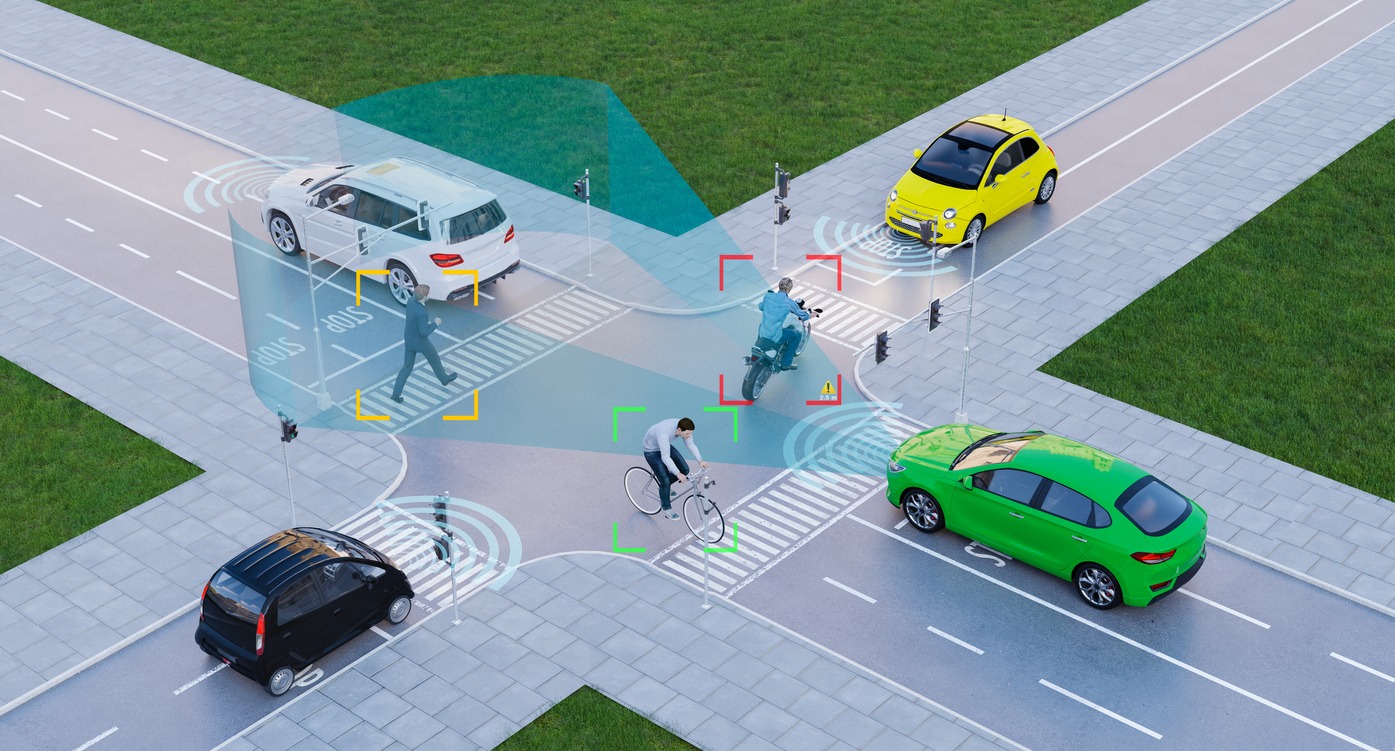
The classic philosophical thought experiment known as the “Trolley Problem” has found its most practical and urgent application in the programming of autonomous vehicles (AVs). In 2026, engineers are tasked with encoding moral priorities into software that may, in rare and unavoidable circumstances, have to choose between two negative outcomes. For instance, should a car prioritize the lives of its passengers over a group of pedestrians, or should it calculate the “lowest total harm” regardless of who is inside the vehicle? This question is no longer a theoretical exercise for students; it is a line of code in an autonomous driving system. As ethics of artificial intelligence continue to evolve, society is debating whether these decisions should be standardized by governments or if individual owners should have the right to “set” their car’s moral preferences, leading to a complex web of ethical subjectivity on the open road.
The complexity of algorithmic decision-making extends beyond binary choices. In 2026, AVs use high-speed sensors to identify objects and predict their trajectories. However, the ethics of “Value of Life” calculations raise significant concerns. If an algorithm identifies a cyclist wearing a helmet versus one without, should it swerve toward the helmeted cyclist because they have a higher chance of survival? Doing so effectively punishes the safer individual. These “edge cases” are being analyzed through massive datasets, but the fundamental challenge remains: machines lack the human capacity for situational nuance and empathy. Ensuring that these systems do not inadvertently create biased or discriminatory outcomes is a primary focus for ethicists and developers alike in the mid-2020s.
The Shift in Responsibility: Liability and Legal Ethics
One of the most disruptive aspects of autonomous driving is the total reimagining of legal liability. In the era of human drivers, the responsibility for an accident was almost always attributed to human error, such as distraction, fatigue, or intoxication. In 2026, as vehicles reach Level 4 and Level 5 autonomy, the “driver” is effectively a passenger. This shifts the ethical and legal burden from the individual to the manufacturer, the software developer, or even the network provider. This transition is forcing insurance companies to rewrite their models entirely. If a software glitch causes a collision, is the primary responsibility with the coder who wrote the algorithm, the company that trained the AI, or the state that certified the road sensors? As ai agents explained functions types become the primary operators of our vehicles, the legal system must determine how to hold non-human entities accountable for physical harm.
The concept of “Meaningful Human Control” is a central pillar of this debate. Even in highly autonomous systems, there is often a requirement for a human to remain “in the loop” for emergency overrides. However, psychologists argue that humans are ill-equipped to suddenly take over a complex driving task after long periods of inactivity. The ethics of requiring a human to be responsible for a machine’s failure is a contentious issue. In 2026, we see a move toward “Corporate Liability” models, where the entities profiting from the technology must bear the risk of its failures. This ensures that manufacturers have a powerful financial incentive to prioritize safety over speed-to-market, creating a more ethical development cycle that protects the general public from experimental or under-tested software deployments.
Safety Maximization vs. Individual Rights
The primary ethical argument in favor of autonomous driving is the preservation of human life. With over 90% of accidents caused by human error, the widespread adoption of AVs could potentially save millions of lives globally. In 2026, data shows a significant drop in traffic fatalities in cities with high AV density. However, this safety maximization often comes at the cost of individual autonomy. For example, should a government be allowed to mandate autonomous driving and ban human drivers on public roads to achieve “Zero-Death” targets? This creates a conflict between the collective good (safety) and the individual right to personal agency and the enjoyment of driving. As technology shaping human evolution pushes us toward a more automated world, the loss of basic human skills like driving is seen by some as a degradation of human capability.
Furthermore, safety maximization can lead to “Cautious Congestion.” To ensure a 0% chance of collision, autonomous cars are often programmed to be extremely conservative, leading to slower traffic flows and increased frustration for human drivers sharing the road. This raises the question of whether a machine should be allowed to take “calculated risks” to improve efficiency. In 2026, the ethical consensus is leaning toward “Pragmatic Safety,” where machines are allowed to mirror human-like assertiveness only when the probability of an incident remains significantly lower than that of a human driver. Balancing the cold logic of a computer with the dynamic flow of human society is a delicate act that requires continuous tuning of the “social contract” between humans and their automated counterparts.
The Ethics of Data Privacy and Constant Surveillance
Autonomous vehicles are essentially “rolling data centers” equipped with an array of cameras, LIDAR, and microphones that constantly scan their surroundings. In 2026, the ethical concerns regarding the data collected by these vehicles have reached a fever pitch. While this data is necessary for the car to navigate, it also records the movements and behaviors of everyone in its vicinity, including pedestrians who never consented to be tracked. Who owns this data? Can it be sold to advertisers to show you targeted ads as you drive past a store? Can the police access it without a warrant to reconstruct a crime scene or track a suspect? As cybersecurity getting much stronger protects the vehicle from hackers, it must also be used to protect the privacy of the citizens it passes every day.
The potential for a “Surveillance State” powered by AVs is a significant ethical risk. In 2026, many privacy advocates are pushing for “Edge Processing,” where the car analyzes visual data locally and deletes it immediately rather than uploading it to a central cloud server. This ensures that the vehicle can “see” a pedestrian to avoid hitting them without “identifying” them via facial recognition. The ethical implementation of AV technology requires a transparent data policy where users and the public have a clear understanding of what is being recorded and for how long. Without these safeguards, the benefits of safer roads could be overshadowed by the loss of public anonymity and the potential for corporate or governmental overreach in the digital age.
One of the most positive ethical outcomes of autonomous driving is the potential for increased social equity. For the elderly, the visually impaired, and people with disabilities, AVs offer a level of independence that was previously impossible. In 2026, autonomous “Robotaxis” are becoming a vital part of the public transport ecosystem, providing door-to-door mobility for those who cannot drive themselves. However, the ethics of accessibility also involve the “Digital Divide.” If autonomous technology remains expensive and limited to wealthy urban enclaves, it could exacerbate existing social inequalities. Using ai assistants making life easier for scheduling and routing, cities must ensure that AV services are affordable and available in underserved rural and low-income areas.
There is also the ethical concern regarding the displacement of workers. The trucking, taxi, and delivery industries employ millions of people globally whose livelihoods are threatened by automation. In 2026, the ethical responsibility of corporations and governments to provide “Just Transition” programs is a major political issue. This includes retraining programs, universal basic income experiments, or “Robot Taxes” that fund social safety nets. Ensuring that the economic benefits of autonomous driving—estimated in the trillions—are shared equitably across society is a fundamental ethical requirement. We cannot consider the technology a success if its implementation leads to widespread economic hardship for the very people it was meant to serve.
Environmental Ethics and Urban Planning
The transition to autonomous driving is closely linked to the global effort to combat climate change. In 2026, the vast majority of AV fleets are electric, contributing to a significant reduction in urban air pollution and carbon emissions. The “Efficiency Ethics” of AVs allow for “platooning,” where vehicles travel closely together at high speeds to reduce aerodynamic drag and save energy. However, there is a counter-argument known as the “Jevons Paradox”: if autonomous driving makes travel so easy and comfortable that people choose to live further away and spend more time in their cars, the total number of miles driven could increase, potentially offsetting the environmental gains. Urban planners in 2026 are using smart devices learning from you and your commuting patterns to design “Compact Cities” that prioritize walking and cycling alongside autonomous transit.
The ethical use of land is also changing. In a world of shared autonomous fleets, the need for massive parking lots in city centers vanishes. This provides a once-in-a-century opportunity to reclaim urban space for parks, affordable housing, and community centers. The ethical choice for 2026 is to use the “Efficiency Dividend” of autonomous driving to create more livable, green, and human-centric cities. If we simply replace every human-driven car with an autonomous one, we will still face the same congestion and urban sprawl. The goal is to move from a model of “Private Ownership” to “Shared Mobility,” which maximizes the utility of each vehicle and minimizes the environmental footprint of our transportation systems.
The Psychology of Trust and Human-AI Collaboration
Trust is the invisible currency of the autonomous age. For society to accept AVs, people must trust that the AI is not only safe but also “predictable” and “human-like” in its behavior. In 2026, developers are focusing on “Explainable AI” (XAI), where the car provides feedback to the passenger about why it is making certain decisions. If a car suddenly brakes, it might display a message saying “Slowing for a pedestrian hidden by the truck.” This builds a collaborative relationship between the human and the machine. Using ai tools to study faster and analyze human psychological responses, companies are designing AV interfaces that reduce motion sickness and anxiety, making the transition to automation a more comfortable experience.
The ethics of “Trust Manipulation” is a rising concern. Companies may design AVs to be overly friendly or persuasive to encourage users to spend more on in-car services or to ignore potential safety flaws. Maintaining a “Healthy Skepticism” is essential. In 2026, independent safety auditors are as important as the developers themselves, providing an unbiased check on the claims made by tech giants. The goal of human-AI collaboration in driving is to create a system where the AI handles the mundane and dangerous aspects of the journey while the human remains the ultimate authority on the destination and the ethical values of the trip. This balanced partnership ensures that we remain in control of our technological destiny.
Global Regulatory Standards and Moral Diversity
As autonomous vehicles begin to cross international borders, the need for global ethical and technical standards has become apparent. However, different cultures have different moral priorities. In 2026, research shows that Western cultures may prioritize the individual, while many Eastern cultures emphasize the collective good in “Trolley Problem” scenarios. How should a global car manufacturer program its vehicles? Should the car “change its morality” as it crosses from Germany into Japan? This “Moral Diversity” poses a significant challenge for international law. As ai tools changing modern workflows allow for rapid localization of software, the debate continues over whether there should be a “Universal Moral Code” for machines or if we should respect regional ethical preferences.
The role of organizations like the United Nations and the ISO is to create a “Baseline of Safety” that transcends cultural differences. This includes standards for sensor reliability, cybersecurity, and data protection. However, the higher-level moral choices remain a matter of national sovereignty. In 2026, we see the rise of “Ethical Certification” for AVs, where a vehicle must pass a series of moral and safety tests before it is allowed on the roads of a specific country. This ensures that the technology respects the values of the local population while still benefiting from the global scale of the autonomous revolution. Navigating this landscape requires a sophisticated dialogue between technologists, philosophers, and diplomats to ensure a harmonious and safe global road network.
Conclusion
The ethics of autonomous driving in 2026 are a reflection of our broader societal values as we enter the age of artificial intelligence. We are moving from a world of individual human responsibility to one of collective algorithmic accountability. While the technical challenges of making a car drive itself have largely been solved, the moral challenge of ensuring it drives “rightly” is just beginning. By focusing on safety maximization, legal clarity, data privacy, and social equity, we can create an autonomous future that truly benefits all of humanity. The key is to remain vigilant and intentional, ensuring that the cold logic of the machine is always guided by the warm heart of human ethics. As we look toward the horizon, the autonomous road of 2026 is not just a path to a destination; it is a journey toward a safer, more efficient, and more equitable world for everyone. The decisions we make today about the programming of these vehicles will define the safety and freedom of generations to come.
References and Further Reading:
Nature: The Moral Machine Experiment |
Wired: The Philosophical Challenges of AVs |
Brookings: Public Policy and AV Ethics