
Edge Computing: The Critical Intelligence Layer for IoT in 2026
Table of Contents
1. Eliminating Latency: The 10ms Breakthrough
2. Bandwidth Efficiency and Cost Optimization
3. Localized Security and Data Privacy
4. Operational Resilience and Offline Functionality
5. Solving the Scalability Bottlenecks of 40 Billion Devices
6. High-Impact Industry Use Cases: Manufacturing to Healthcare
7. The Rise of Edge AI and Prescriptive Maintenance
8. The Future Landscape: Hybrid Edge-Cloud Ecosystems
9. Conclusion
Eliminating Latency: The 10ms Breakthrough
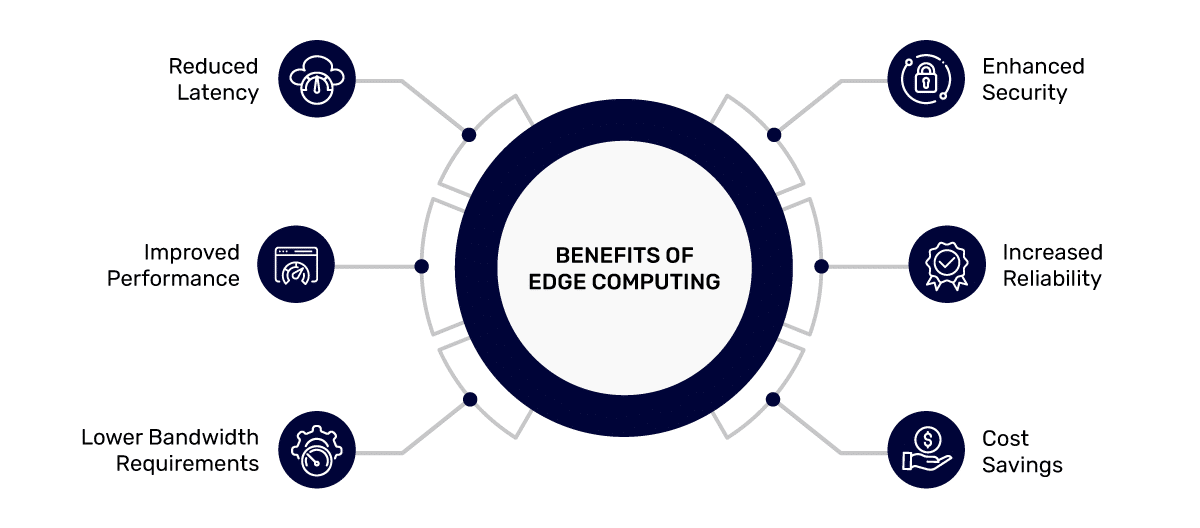
In the high-stakes environment of 2026, latency is often the difference between success and catastrophic failure. Traditional cloud round-trips can take anywhere from 60 to 100 milliseconds, a delay that is unacceptable for autonomous vehicles, robotic surgery, or industrial safety shut-offs. Edge computing solves this by processing data at local nodes, reducing round-trip latency to below 10 milliseconds. This near-instantaneous feedback loop allows IoT devices to respond to environmental changes in real time. As ai tools changing modern workflows integrate with these local nodes, the ability to sense, decide, and act occurs within the same physical location, ensuring that time-sensitive operations remain fluid and safe.
[Image showing data flow comparison between centralized cloud (high latency) and edge computing (low latency)]Bandwidth Efficiency and Cost Optimization
The sheer volume of data generated by modern IoT ecosystems is staggering. Sending every raw packet of data from billions of sensors to a central cloud is not only technically difficult but prohibitively expensive. Edge computing acts as a sophisticated filter, processing raw data locally and only transmitting “meaningful” insights or anomalies to the cloud for long-term storage. For instance, a smart city surveillance camera might process thousands of hours of video locally, only uploading a small clip when a specific event is detected. Using ai assistants making life easier for data management, companies are reducing their cloud storage and egress costs by up to 40%, making large-scale IoT deployments economically viable for the first time.
Localized Security and Data Privacy
As cybersecurity getting much stronger in 2026, the edge has become a primary line of defense. By processing sensitive data locally—such as biometric information in smart locks or patient vitals in medical wearables—the data never has to travel across the public internet where it could be intercepted. This “Privacy by Design” approach helps organizations comply with increasingly strict global data protection regulations. Furthermore, edge nodes can act as security gateways, performing real-time threat detection and isolating compromised IoT devices before an attack can spread to the main network. This decentralized security model limits the “blast radius” of any single breach, protecting the integrity of the entire ecosystem.
Operational Resilience and Offline Functionality
A major vulnerability of cloud-dependent IoT is the “Single Point of Failure.” If a central server goes down or a fiber optic cable is cut, an entire smart factory or grid could grind to a halt. Edge computing provides operational resilience by allowing local systems to function independently of a cloud connection. In 2026, mission-critical operations like remote mining sites or offshore wind farms rely on edge nodes to maintain safety protocols and basic logic even during extended network outages. As ai agents explained functions types are deployed at the edge, these systems can perform complex autonomous tasks without needing constant “permission” from a distant data center, ensuring 99.999% uptime for vital infrastructure.
Solving the Scalability Bottlenecks of 40 Billion Devices
Scaling an IoT network to 40 billion devices is physically impossible with a purely centralized model; the network backbone simply cannot handle the traffic. Edge computing provides the “Disaggregated Architecture” necessary for global scalability. By distributing the computational load across millions of local edge servers and micro-datacenters, the burden on the core network is significantly reduced. This allows for hyper-personalized IoT ecosystems where every device can be updated and managed locally. Using smart devices learning from you and your local environment, these distributed systems can scale horizontally, adding new nodes as demand grows without requiring a massive overhaul of the central cloud infrastructure.
High-Impact Industry Use Cases: Manufacturing to Healthcare
The practical application of edge computing in 2026 is transformative across all sectors. In manufacturing, edge-powered sensors perform quality inspections at line speed, catching defects that the human eye would miss. In healthcare, “Bedside Analytics” allow for continuous patient monitoring with instant alerts for cardiac events, all while keeping patient data strictly local. As wearables tracking smart activities become standard medical tools, the edge provides the low-latency processing needed to turn raw biometric data into actionable medical insights. Even in retail, edge-enabled computer vision systems analyze shopper behavior in real-time to adjust store layouts and inventory levels, creating a more responsive and efficient shopping experience.
The Rise of Edge AI and Prescriptive Maintenance
One of the most significant trends in 2026 is the transition from predictive to “Prescriptive Maintenance.” While previous systems could predict when a machine might fail, modern edge AI systems can prescribe the exact steps to prevent the failure. These models run directly on the edge hardware, analyzing vibrations and thermal patterns to make split-second adjustments to machine speed or load. Using ai tools to study faster and train more efficient models, developers are now able to deploy complex neural networks onto low-power edge chips. This “Edge Intelligence” allows for autonomous self-healing systems that can correct their own errors before they impact production, representing the pinnacle of industrial automation.
The Future Landscape: Hybrid Edge-Cloud Ecosystems
Despite the rapid growth of the edge, the cloud remains a vital component of the 2026 IoT landscape. We are entering the era of the “Hybrid Continuum,” where the edge handles immediate reactions and the cloud manages long-term strategy, model training, and global coordination. This synergy ensures that the best of both worlds is utilized: the speed and privacy of the edge combined with the massive storage and computational power of the cloud. As technology shaping human evolution drives us toward a more hyper-connected world, the ability to seamlessly move workloads between the edge and the cloud will be the defining characteristic of successful digital transformation strategies.
Conclusion
In 2026, edge computing is no longer a luxury for specialized projects; it is the fundamental engine that makes the Internet of Things functional, secure, and scalable. By addressing the critical limitations of latency, bandwidth, and security, edge computing has unlocked the true potential of our 40 billion connected devices. As we move further into a decade defined by autonomous systems and AI-driven intelligence, the “Edge-First” philosophy will continue to reshape industries, cities, and our daily lives. The companies that embrace this decentralized future will be the ones that lead their industries through superior efficiency, lower costs, and unparalleled responsiveness. The edge is where the digital and physical worlds truly meet, and in 2026, that meeting point is the center of the technological universe.
References and Further Reading:
Global Market Insights: Edge Computing Growth Trends 2026-2035 |
Mayura: Top 11 Edge Computing Trends in 2026 |
TechCon: Transforming Industry’s Future with Edge AI