
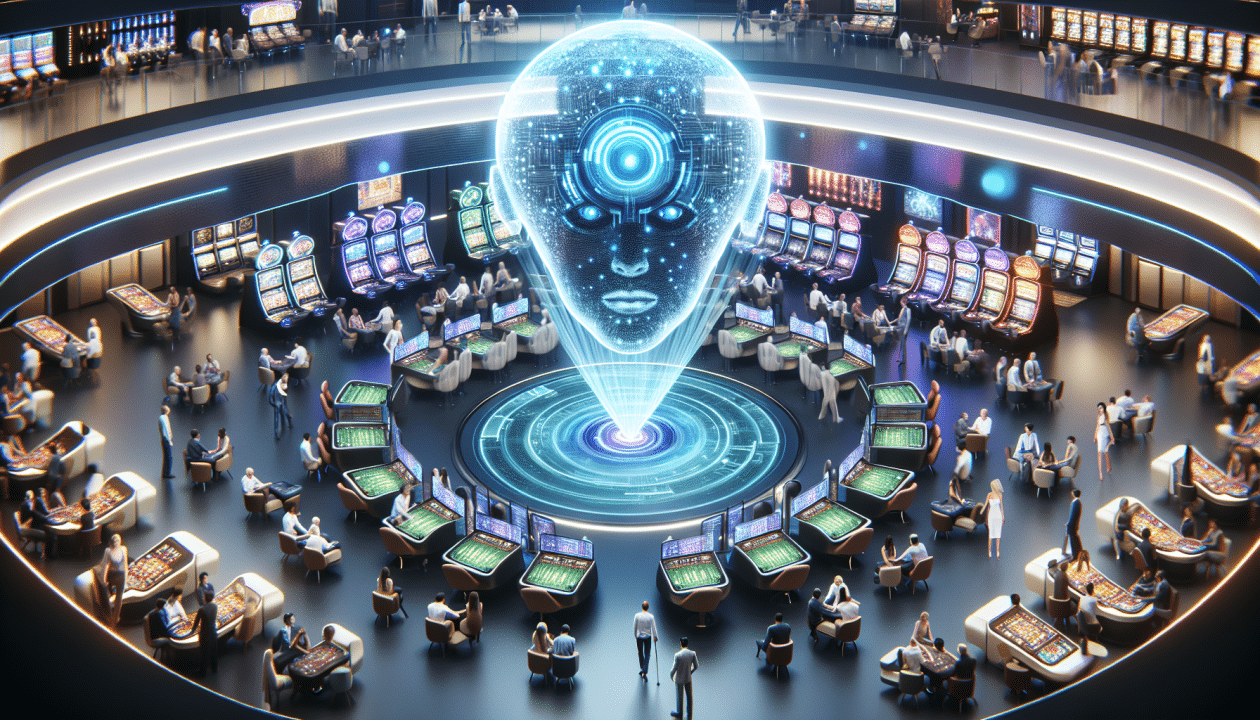

AI Shaping the Gaming Industry
Table of Contents
- Introduction
- The Rise of AI in Gaming
- Enhancing Game Development
- AI-Powered Game Mechanics
- Personalized Gaming Experiences
- Immersive Graphics and Realism
- Testing and Quality Assurance
- Ethics and AI in Gaming
- Future Trends
- Conclusion: The Future of Gaming is AI
Introduction
In recent years, artificial intelligence (AI) has been revolutionizing various sectors, and the gaming industry is no exception. From enhancing gameplay to creating dynamic visuals, AI is proving to be a game-changer. As a tech-savvy teen or young adult, understanding how AI influences gaming can broaden your perspective on this exciting world. This article explores the multifaceted role of AI in shaping the gaming industry, delving into game development, mechanics, personalized experiences, and future trends.
The Rise of AI in Gaming
AI has been a part of gaming since the early days, primarily serving to provide predictable behaviors for non-player characters (NPCs). However, the landscape is shifting dramatically. The advent of sophisticated algorithms and machine learning techniques has paved the way for intelligent systems capable of more complex interactions and behaviors. This evolution enhances not only gameplay but also the entire gaming ecosystem, from development to user engagement.
Enhancing Game Development
Game development is often a complex process, requiring collaboration among artists, designers, and programmers. AI tools are now streamlining this process by automating repetitive tasks, allowing developers to focus on creativity and innovation. Imagine AI-generated art assets that can be customized to fit the aesthetic of a game, or algorithmic narration that adapts to player choices. These advancements speed up the development cycle and reduce costs, making it feasible for smaller studios to compete with bigger names.
Procedural Generation
A highlight of AI in game development is procedural generation, where algorithms create entire game worlds or environments. Games like Minecraft and No Man’s Sky utilize this technology to provide vast, unique landscapes for players to explore. This means that each gameplay experience can be different, enhancing replayability and keeping players engaged.
AI-Powered Game Mechanics
AI is not just about creating characters that behave more naturally; it’s also about enhancing the mechanics that govern gameplay. With advanced AI, developers can create responsive enemies, adaptive difficulty levels, and smart decision-making systems.
Intelligent NPC Behavior
Gone are the days of predictable NPC behavior. AI techniques such as reinforcement learning enable NPCs to learn from player interactions, making them more challenging and responsive. This not only enhances the competitive aspect of games but also immerses you in a more realistic environment.
Dynamic Difficulty Adjustment
AI-driven systems can analyze your gameplay patterns in real-time. If you’re breezing through levels, the game can automatically increase its difficulty, ensuring that you remain challenged and engaged. Conversely, if you’re struggling, the game can ease back, allowing for a more enjoyable experience.
Personalized Gaming Experiences
AI’s ability to analyze data can lead to incredibly personalized gaming experiences. By tracking your preferences, playstyle, and even emotional reactions, games can tailor their content to suit your individual tastes.
Adaptive Storytelling
Imagine a game that evolves based on your choices and preferences. AI can create branching narratives tailored to your decisions, leading to unique storylines for each player. This level of personalization keeps the narrative fresh and enticing, encouraging you to replay the game to see different outcomes.
Recommendation Systems
Much like how music and video platforms suggest content based on your interests, AI can recommend games that align with your preferences. By analyzing gameplay data, AI can identify titles you may enjoy, enhancing your gaming library while keeping you engaged with the content you love.
Immersive Graphics and Realism
The gaming industry’s visual aspect has seen tremendous improvement, largely thanks to AI. From creating lifelike characters to simulating realistic environments, AI technologies are pushing the boundaries of what’s possible in gaming.
Ray Tracing
Ray tracing technology simulates light behavior in real-time, resulting in hyper-realistic graphics. AI is used to optimize this process, ensuring that even less powerful gaming systems can handle these demanding visuals, making games look stunning without compromising performance.
Facial Recognition and Animation
AI is also making strides in character animation. Using neural networks, developers can create more fluid and lifelike movements, enhancing emotional expressions and making interactions much more engaging. This means characters can respond intelligently to your actions, heightening the immersion of the game.
Testing and Quality Assurance
Game testing has long been a tedious and time-consuming process, often requiring extensive human resources to ensure quality. AI is now stepping in to simplify and speed up this aspect of development.
Automated Testing Tools
AI can automate the testing process, identifying bugs and glitches more quickly than teams of human testers. This means developers can focus on creating a polished final product, reducing time-to-market while delivering a higher-quality experience for players.
Performance Analysis
By monitoring gameplay data, AI tools can help developers gain insights into player behavior, performance metrics, and potential flaws within the game. This data-driven approach leads to continuous improvement and more refined gaming experiences.
Ethics and AI in Gaming
With the rapid integration of AI in gaming, ethical considerations must also be addressed. Issues surrounding data privacy, game addiction, and the impact of AI-driven interactions are becoming critical topics of discussion.
Data Privacy Concerns
As games increasingly collect data to personalize experiences, concerns about what information is being gathered and how it is used arise. Ensuring user consent and transparency will be vital for maintaining player trust.
Combatting Game Addiction
AI can also be designed to monitor player behavior, potentially flagging patterns indicative of excessive gaming. This proactive measure could encourage healthier gaming habits, benefiting both players and the industry.
Future Trends
Looking ahead, the role of AI in gaming will only continue to expand. Expect to see innovations such as:
Virtual Reality (VR) and Augmented Reality (AR)
AI will undoubtedly play a significant role in advancing VR and AR technologies. These fields rely heavily on real-time data processing and environmental interaction, setting the stage for immersive experiences that are both engaging and educational.
Enhanced Multiplayer Experiences
The competitive nature of online gaming will also evolve with AI, offering smarter matchmaking and dynamic in-game events that adapt to community behaviors and preferences, fostering stronger player connections and community engagement.
Conclusion: The Future of Gaming is AI
As AI continues to shape the gaming industry, it fosters a new era of creativity, personalization, and engagement. Whether you’re developing games or simply enjoying them, understanding AI’s influence can enrich your experience. Get ready to embrace a future where games are not just played but felt, making interactions more meaningful while redefining entertainment for generations to come. Stay tuned and keep gaming, because the future is brighter with AI!