
Future Gadgets Coming Very Soon Now
Table of Contents
- The Evolution of Near-Future Tech
- Wearables Beyond the Wrist: AR & E-Textiles
- The New Era of Computing: Generative AI in Hardware
- Health Revolution: Bio-Integrated Gadgets
- Personal Mobility and Sustainable Devices
- Ethical Crossroads: Privacy and Accessibility Challenges
- Conclusion: Preparing for the Tech Tsunami
The Evolution of Near-Future Tech
The pace of technological advancement today is so rapid that what seemed like science fiction yesterday is now a prototype being prepared for mass consumption. We are not just talking about incremental upgrades to smartphones, but genuine paradigm shifts in how we interact with the physical and digital worlds. From augmented reality wearables that redefine communication to bio-integrated tech that monitors your health in real-time, the next few years promise a radical transformation of our daily lives. This comprehensive guide delves into the most exciting, near-future gadgets poised to hit the consumer market, exploring their technology, potential impact, and the ethical considerations we must face.
A Shift from Screens to Context: Ambient Computing
For the last decade, our primary interaction point has been the smartphone screen. However, upcoming gadgets emphasize context-aware, ambient computing. This means the technology works in the background, offering information exactly when and where it is needed, without requiring constant attention. For instance, a future earpiece might translate a foreign conversation in real-time, or a smart mirror might analyze your sleep quality without you initiating any commands. This movement ensures that technology becomes a seamless, invisible part of the environment.
Miniaturization and Power Efficiency: The Edge AI Revolution
The ability to pack immense processing power into tiny, energy-efficient chips (often referred to as Edge AI processors) is the driving force behind this revolution. This miniaturization allows complex tasks, like machine learning inference and real-time data processing, to occur directly on the device rather than relying solely on cloud servers. This improves speed, reliability, and critically, user privacy. The shift to smaller, more powerful batteries and efficient energy harvesting methods is what makes these continuous-use, integrated devices truly feasible for the mass market.
Wearables Beyond the Wrist: AR & E-Textiles
Smartwatches paved the way, but the next generation of wearables will fundamentally alter sensory input and style, merging computing with fashion and functionality. This transformation is driven by advancements in display and fabric technology.
The Rise of Everyday AR Glasses and Spatial Computing
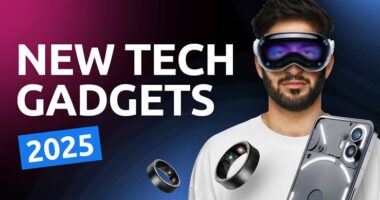
Augmented Reality (AR) glasses are poised to replace the smartphone as the primary personal device. Unlike bulky Virtual Reality (VR) headsets, these upcoming glasses are designed to be light, stylish, and worn all day, overlaying digital information onto the real world. Near-future AR glasses will use advanced Micro-LED technology combined with specialized waveguides to project crisp, vibrant images directly onto the user’s view, ensuring high fidelity without obstructing natural vision. This enables Spatial Computing Platforms, which map the physical environment in three dimensions and place digital objects stably within that space, making the interaction intuitive. Major tech companies are now releasing lightweight, affordable models that act as essential phone extensions for both communication and productivity.
Smart Fabric and E-Textiles: Wearable Sensors
Soon, your clothing will transform into a powerful, invisible gadget. Smart fabrics, known as e-textiles, seamlessly integrate conductive fibers and micro-sensors directly into the material without compromising comfort or washability. New advancements in organic solar cells on fibers even allow fabrics to harvest solar energy for self-powering. These garments can continuously and non-invasively track vital signs (heart rate variability, respiration rate, and muscle fatigue) with superior accuracy, offering early health warnings. Furthermore, future outerwear may be able to dynamically adjust its temperature or stiffness based on external conditions or the wearer’s activity level, moving beyond simple passive insulation to active, adaptive comfort.
The New Era of Computing: Generative AI in Hardware
The biggest breakthroughs are not just in the exterior design of the gadgets, but in how Artificial Intelligence is embedded directly into their core hardware, making them less reactive to commands and far more proactive in assistance. This tight integration is changing the foundational architecture of consumer electronics.
Dedicated AI Processors (NPUs) and On-Device Processing
New gadgets are being equipped with specialized, dedicated Neural Processing Units (NPUs). These chips are optimized to run massive machine learning models extremely efficiently. This architecture means AI tasks that previously required powerful cloud servers can now be performed locally and instantly, ensuring real-time performance and privacy. This enables instantaneous, low-latency translation in communication gadgets and allows cameras in future devices to instantly recognize objects, faces, and scenes using local AI models, offering relevant contextual information without needing an internet connection. The NPU is rapidly becoming the third pillar of the modern System-on-Chip (SoC) alongside the CPU and GPU.
The Transformation of Personal Assistants: Digital Delegation
The next iteration of voice assistants will operate as personalized digital delegates or “twins.” These assistants will autonomously manage complex workflows, proactively filter communications based on context and urgency, and even draft sophisticated emails or summarize lengthy reports based on deep learning about the user’s communication style. This represents a significant leap from basic automation to genuine **digital delegation** and cognitive partnership. They move from simple tools to proactive managers of one’s digital life.
Health Revolution: Bio-Integrated Gadgets
The most profound and life-altering shift will be in health technology, with devices becoming smaller, less intrusive, and exponentially more powerful in continuous diagnosis and personalized intervention. The biosensor market alone is expected to more than double in the coming decade, reflecting this enormous growth in demand for personal health data.
Continuous Monitoring for General Wellness: Beyond Disease
Continuous Glucose Monitoring (CGM) technology, originally for diabetics, is quickly becoming a mainstream wellness gadget. Non-invasive devices worn on the arm or embedded in a small patch will soon track key biomarkers in real-time for general users. This wealth of data will enable hyper-personalized nutrition and exercise plans based on individual metabolic responses to food and stress, leveraging the power of nano-enabled biosensors. The goal is preventative health based on comprehensive, always-on data streams.
Smart Contact Lenses and Tear Chemistry Analysis
Contact lenses equipped with micro-sensors are rapidly moving from the lab to the consumer space. These lenses could potentially measure tear chemistry to track hydration, stress levels (via cortisol traces), and early signs of disease, sending data wirelessly to a connected phone or AR glasses. They represent the ultimate fusion of visual correction and biometric monitoring, collecting data from one of the most chemically rich fluids in the body.
Advanced Neuro-Tech for Sleep and Focus
Gadgets designed to improve cognitive health and sleep quality are integrating advanced neurofeedback technology. Sleep headphones and headbands are emerging that use gentle sound waves or targeted electrical stimulation to optimize specific brainwave patterns. These devices aim to actively enhance deep sleep, reduce mental stress, and improve focus during the day, moving beyond passive tracking to active cognitive intervention. This field promises significant improvements in performance and mental wellbeing.
Personal Mobility and Sustainable Devices
The revolution is not confined to the small screen; it extends to how we move, interact with logistics, and maintain our personal environments. Innovation is focusing on autonomy and long-term device viability.
Autonomous Micro-Mobility and Last-Mile Logistics
Beyond massive self-driving cars, smaller, semi-autonomous e-scooters and e-bikes with advanced AI stability control, and small-scale delivery robots are becoming common sights in urban areas. These robots utilize sophisticated computer vision and obstacle avoidance algorithms to navigate crowded sidewalks and complex urban environments, revolutionizing local commerce and last-mile delivery efficiency. This push for micro-mobility solutions reduces reliance on traditional, larger vehicles in dense cities.
Modular and Sustainable Gadgets: The Right to Repair
A growing trend, driven by both consumer demand for value and legislative changes (such as “Right to Repair” laws), is the development of truly modular gadgets. Future smartphones, laptops, and professional consoles will be designed with easily swappable, standardized components. This allows users to upgrade individual parts without replacing the entire device. This principle significantly promotes sustainability, reduces electronic waste, and appeals greatly to the environmentally conscious younger generation by extending the usable life of expensive technology.
Ethical Crossroads: Privacy and Accessibility Challenges
The arrival of this pervasive, deeply integrated technology brings significant societal and ethical questions that must be urgently addressed before mass adoption fully takes hold. The risks associated with always-on devices require careful consideration from both consumers and regulators.
The Privacy Paradox of Always-On Devices
AR glasses and bio-integrated sensors are inherently “always-on,” high-fidelity data collectors. They continuously record what you see and hear, where you go, and how your body functions. The core challenge is maintaining user privacy when the technology is designed to be deeply integrated into the self. Technology companies must implement robust **on-device encryption** and adopt **federated learning** to truly build and maintain consumer trust on a global scale. The sheer volume of sensitive personal data creates an irresistible target for malicious actors.
The Widening Digital Divide and Accessibility
The cost of these groundbreaking, complex gadgets risks widening the already existent **Digital Divide**. If essential societal functions increasingly rely on expensive AR or AI technology, those who cannot afford the entry price will inevitably be left behind. Manufacturers must prioritize low-cost versions, and regulators must enforce design standards that ensure accessibility for people with physical and cognitive disabilities, ensuring that future tech is truly inclusive.
Security Vulnerabilities in Bio-Data
Data collected from health gadgets (bio-data) is arguably the most sensitive information a user possesses. A security breach of this data could lead to serious medical or financial discrimination. Ensuring unhackable, end-to-end encryption and strict adherence to global health data privacy regulations for all medical-grade consumer gadgets is a non-negotiable requirement for the near future. This demands higher security standards than traditional consumer devices.
Conclusion: Preparing for the Tech Tsunami
The immediate future of consumer technology is vibrant, transformative, and deeply personal. The gadgets coming very soon—from sleek AR glasses to clothing that constantly monitors our internal health—are poised to make life incredibly convenient, highly productive, and intensely personalized. This wave of innovation demands more than just passive consumer adoption; it requires conscious, ethical participation.
For young adults and future leaders, understanding the underlying technology—Edge AI, NPUs, spatial computing, and e-textiles—is key to harnessing their power. More importantly, we must actively engage in the conversation about the ethical implications, demanding privacy by design and ensuring that these powerful tools are accessible to all people, regardless of economic standing. The future isn’t a distant dream; it’s being shipped to us right now, and the time to prepare for its opportunities and challenges is today.
Further Reading and Resources
Explore these links to dive deeper into the technologies shaping our near future:
- The Definitive Guide to Spatial Computing and AR Glasses
- The On-Device AI Revolution: A Comprehensive Analysis of Neural Processing Units (NPUs)
- Advances in Wearable Biosensors for Healthcare: Current Trends and Future Perspectives
- Smart Textiles 2025: Exploring the Future of Wearable Technology
- A Critical Look at Privacy in Always-On Wearable Technology