
How 3D Printing Changes Manufacturing
The rise of 3D printing technology has completely revolutionized the world of manufacturing. Once considered a futuristic idea, it’s now transforming industries like automotive, healthcare, construction, and even fashion. By enabling the creation of complex designs with precision and efficiency, 3D printing — also known as additive manufacturing — is redefining how products are designed, produced, and delivered. This innovation is part of the broader future of technology trends shaping the modern industrial era.
What Is 3D Printing?
3D printing is the process of creating three-dimensional objects layer by layer from digital files. Unlike traditional manufacturing, which removes material through cutting or drilling, 3D printing adds material only where needed. This reduces waste and allows for incredible design flexibility. With advances in machine learning and AI-powered design tools, modern printers can now adapt automatically to optimize speed and quality during production.
How 3D Printing Works
- Designers create a 3D model using CAD (Computer-Aided Design) software.
- The model is sliced into thin digital layers.
- A 3D printer deposits materials (plastic, resin, or metal) layer by layer.
- The object is built from the bottom up, solidifying as each layer fuses.
- After printing, the product may undergo finishing processes like polishing or painting.
Transforming Traditional Manufacturing
One of the most significant ways 3D printing is changing manufacturing is through on-demand production. Instead of waiting weeks for a part to be produced overseas, companies can now print components in-house within hours. This reduces shipping costs, waste, and dependence on large inventories. Such capabilities are especially beneficial in industries that demand rapid prototyping and small-batch customization, such as in future gadgets and electronics development.
Benefits Over Traditional Methods
- Reduced waste: Material is only used where needed.
- Faster prototyping: New ideas can be tested quickly.
- Customization: Each item can be unique.
- Lower storage costs: On-demand production reduces inventory.
- Complex designs: Shapes that were once impossible can now be printed.
Applications Across Industries
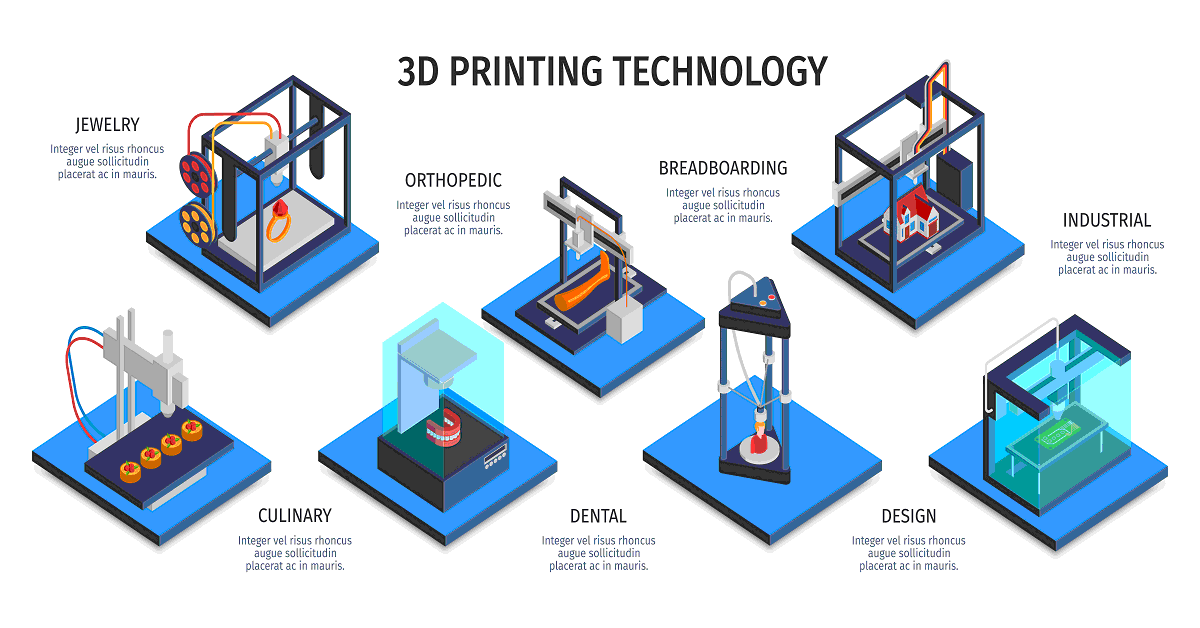
3D printing’s flexibility has led to its adoption across multiple sectors. From aerospace to medicine, the applications are expanding rapidly as printers become faster, cheaper, and more accurate.
1. Automotive Industry
Car manufacturers are using 3D printing to produce lightweight parts and reduce production time. This is helping companies create fuel-efficient vehicles while maintaining durability. Many electric car developers, discussed in Future of Electric Vehicles, are also integrating 3D-printed components to innovate faster.
2. Healthcare and Medicine
3D printing is making personalized medicine a reality. Doctors can now print prosthetics, implants, and even human tissues tailored to each patient. This has improved surgical outcomes and reduced recovery times, a breakthrough also linked to technology in healthcare innovation.
3. Aerospace and Defense
In aerospace, 3D printing enables the creation of ultra-lightweight and durable parts that meet strict safety standards. NASA, for example, uses printed parts for satellites and spacecraft, reducing launch costs significantly.
4. Construction
The construction industry is now experimenting with large-scale 3D printers capable of building entire homes using sustainable materials. This method reduces labor costs and construction waste while making housing more affordable.
5. Consumer Products
From eyewear to footwear, 3D printing has empowered companies to create products that are both stylish and sustainable. Personalized designs can now be manufactured at scale, allowing for better customer satisfaction and less waste.
Environmental Impact of 3D Printing
As the world pushes for greener solutions, 3D printing aligns perfectly with the vision of tech fighting climate change. Because it minimizes waste and allows for local production, it dramatically reduces transportation emissions and material consumption. Furthermore, researchers are developing bio-based printing materials such as recycled plastics and plant-derived resins to make manufacturing even more eco-friendly.
Eco-Friendly Advantages
- Less waste generation compared to traditional manufacturing
- Recyclable and biodegradable printing materials
- Reduced shipping and packaging emissions
- Energy-efficient production processes
The Role of AI and Automation
Modern 3D printers are becoming smarter thanks to AI. Predictive analytics can now identify potential print errors before they occur, ensuring efficiency and quality control. This AI integration is part of the growing synergy between automation and additive manufacturing — a concept deeply explored in Future of Robotics and Automation. With automated systems, manufacturers can now run 24/7 operations without human intervention.
Challenges in Widespread Adoption
Despite its promise, 3D printing still faces challenges that prevent full-scale adoption. High equipment costs, limited materials, and slower printing speeds for large-scale products remain obstacles. Additionally, intellectual property concerns arise when designs can easily be copied and printed anywhere in the world. Manufacturers are now focusing on improving print speed, expanding material options, and developing secure digital frameworks to overcome these challenges.
The Future of 3D Printing
The future of 3D printing looks incredibly bright. As technologies evolve, we can expect faster, cheaper, and more sustainable production methods. 3D printing may soon integrate fully with blockchain for supply chain security, and even with quantum computing to simulate better materials and designs. The result will be a manufacturing landscape that is highly adaptive, decentralized, and innovative.
Predicted Trends for 2025 and Beyond
- Integration with AI-driven design software
- Expansion of industrial-grade metal printing
- Mass customization for consumers
- Sustainable and recyclable materials
- Automated, smart factories
Conclusion
3D printing is not just a manufacturing innovation — it’s a global movement redefining production as we know it. By reducing waste, speeding up prototyping, and enabling infinite creativity, it empowers industries to move toward sustainability and efficiency. As technology continues to evolve, the fusion of AI, automation, and additive manufacturing will shape a smarter and more connected future for industrial innovation.