
Quantum Tech Reaching New Frontiers
Table of Contents
- The Dawn of the Quantum Era: Fundamental Concepts
- Quantum Computing: The Race for Qubit Supremacy
- Hardware and The Transition to Fault Tolerance
- Quantum Sensing: Precision Beyond Classical Limits
- Revolutionizing Diagnostics, Navigation, and Geophysics
- Quantum Communication and the Unhackable Network
- Post-Quantum Cryptography: The Immediate Security Imperative
- The Industrial and Economic Impact of Quantum Technologies
- Challenges, Ethics, and the Quantum Talent Gap
- Conclusion: The Quantum Leap Forward
The Dawn of the Quantum Era: Fundamental Concepts
The field of quantum technology, once relegated to theoretical physics laboratories, has decisively moved into the realm of engineering and commercialization. We are witnessing the beginnings of a Second Quantum Revolution, one that harnesses the fundamental and counter-intuitive laws governing matter and energy at the atomic and subatomic scales to create devices with capabilities impossible for any classical machine. This emerging frontier is built upon three core pillars—quantum computing, quantum sensing, and quantum communication—each promising to redefine entire industries from medicine and finance to security and materials science. Understanding this revolution begins with grasping the foundational quantum phenomena that power these breakthroughs: superposition, entanglement, and interference.
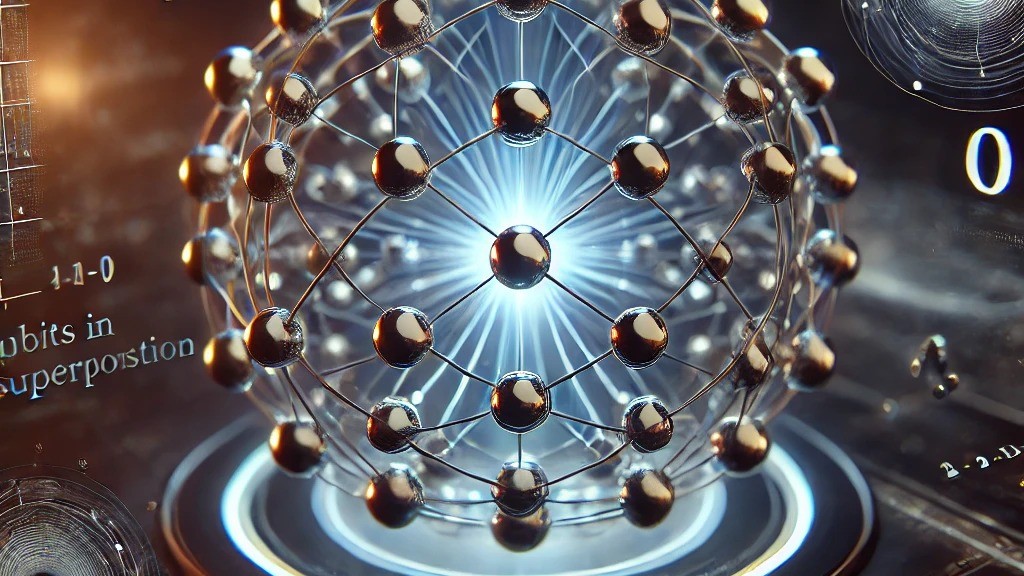
In classical computing, information is encoded in bits represented by either a 0 or a 1. Quantum computing utilizes the **qubit** (quantum bit), which takes advantage of **superposition**. A qubit can exist in a combination of both 0 and 1 simultaneously, enabling a quantum computer with just a few hundred qubits to explore a computational space larger than the number of atoms in the known universe. This exponential scaling of computational space is the source of quantum computing’s ultimate power. Furthermore, **entanglement** is a bizarre quantum connection where two or more qubits become intrinsically linked, such that measuring the state of one instantly reveals information about the state of the others, regardless of the physical distance separating them. This correlation allows quantum systems to coordinate their calculations in ways that are entirely foreign to classical processors. Finally, **quantum interference** acts as the engine of computation, selectively amplifying the probability of correct answers while cancelling out the probability of incorrect ones, guiding the vast superposition of states toward a desired solution. These principles collectively enable quantum systems to tackle certain complex problems—currently intractable for even the most powerful supercomputers—many times faster.
Quantum Computing: The Race for Qubit Supremacy
Quantum computing has garnered the most attention, sparking a fierce global race among technology giants and nation-states alike to achieve **quantum advantage**, the point where a quantum computer can solve a practical, real-world problem faster and more affordably than its classical counterpart. The current focus remains on scaling the number of physical qubits while simultaneously improving their quality. Recent roadmaps from industry leaders demonstrate this aggressive push. For example, IBM is aiming for processors that feature over a thousand qubits, transitioning to multi-chip configurations that leverage quantum communication links to connect these separate processing units into a cohesive system containing thousands of total qubits. Similarly, other firms like Fujitsu are scaling superconducting systems, while others pursue entirely different physical approaches to qubit design. This relentless pursuit of more powerful quantum processors is driven by the immediate need to move out of the purely experimental phase and into commercially viable applications, initially focusing on the optimization and simulation problems that characterize the current state of quantum utility.
Hardware and The Transition to Fault Tolerance
The journey toward a practical quantum computer is constrained primarily by technological complexity, particularly the challenge of managing hardware architectures and combating errors. Currently, several primary qubit modalities are being explored by major players, each with distinct advantages and drawbacks. **Superconducting qubits**, which require operation near absolute zero in specialized cryostats, offer fast operation and integration with classical electronics but are highly sensitive to environmental noise. **Trapped ion qubits** utilize electromagnetically suspended individual atoms, offering extremely high fidelity and long coherence times, but scaling the number of ions remains a significant engineering hurdle. **Photonic qubits**, which encode information in light particles, are robust at room temperature and ideal for networking but are currently challenging to control for complex logic operations. A rapidly emerging field involves **neutral atoms**, which offer vast arrays and excellent coherence, presenting a promising avenue for large-scale, scalable systems.
The key barrier to unlocking the full potential of quantum computing is **decoherence**, the process by which a fragile quantum state collapses due to interaction with the environment, resulting in computational errors. This challenge necessitates the development of **fault-tolerant quantum computing (FTQC)**. The industry is currently moving beyond simple error suppression and error mitigation—which is a post-processing, statistical technique—to the much more complex domain of **quantum error detection and correction**. This technique involves encoding a single, robust logical qubit onto an array of multiple, redundant physical qubits (ancilla or helper qubits). These redundant physical qubits constantly monitor the quantum information for errors and correct them in real-time without collapsing the state. Achieving reliable FTQC, though requiring massive overhead in terms of physical qubit count, will be the true milestone that transforms quantum computing from a research tool into a universally powerful utility, capable of running complex algorithms like Shor’s with guaranteed accuracy.
Quantum Sensing: Precision Beyond Classical Limits
While quantum computing captures the headlines, quantum sensing is arguably the most commercially mature component of quantum technology, with devices already moving from specialized laboratories into the field. Quantum sensing harnesses quantum properties like superposition and entanglement not for computation, but for ultra-precise measurement. These sensors achieve levels of sensitivity and reliability that fundamentally surpass the theoretical limits of their classical counterparts, providing orders-of-magnitude improvements in the measurement of physical quantities such as time, magnetic fields, electric fields, and gravity.
The underlying principles of quantum sensing often involve the manipulation of individual atoms or electron spins within materials, such as the nitrogen-vacancy (NV) centers in diamonds or neutral atoms in a vacuum. These quantum systems are exquisitely sensitive to external environmental perturbations, allowing them to detect minute changes in physical parameters. This has direct, disruptive applications in fields where measurement precision dictates performance and safety. For instance, **atomic clocks**, which use the quantum properties of atoms to define time, are already the most precise timekeeping devices in existence, crucial for modern GPS and telecommunication networks. New quantum-enhanced versions promise even greater stability, essential for future high-speed data transfer and deep space navigation.
The impact of quantum sensing is already beginning to revolutionize several critical sectors. In healthcare, quantum biosensors hold the potential to transform diagnostics. Conventional neuroimaging techniques, such as Magnetoencephalography (MEG) and Magnetic Resonance Imaging (MRI), are often limited by the need for expensive, bulky cryogenics and highly shielded rooms to contain ambient magnetic noise. New generations of quantum biosensors, which can operate at room temperature and are small enough to be wearable, promise measurements of magnetic signals in the human body with unparalleled precision. This could allow for the detailed, millimeter-scale mapping of brain activity in real-time, offering novel insights into neurodegenerative disorders, seizure detection, and advanced cognitive research. Detecting early-stage biomarkers at the molecular level with this level of sensitivity could lead to the early diagnosis of diseases that are currently difficult to catch until later, more difficult-to-treat stages.
In navigation, quantum sensors are poised to eliminate the reliance on vulnerable global positioning systems (GPS). **Quantum gravimeters** and **quantum compasses** function by measuring subtle shifts in the Earth’s local gravitational field or its rotation relative to an inertial frame. Because these measurements are intrinsic to the laws of physics, they are immune to external interference, jamming, or spoofing. This capability is critical for military applications, autonomous vehicles operating in dense urban canyons or underwater, and even for future planetary exploration missions where satellite communication is intermittent. Furthermore, in geophysics and resource exploration, quantum gravimeters can map subsurface density variations with extreme accuracy, aiding in mineral detection, groundwater monitoring, and structural fault analysis, providing crucial data for civil engineering projects and climate monitoring efforts.
Quantum Communication and the Unhackable Network
Quantum communication focuses on leveraging quantum principles to create ultra-secure communication channels and eventually build a quantum internet. The most mature application in this domain is **Quantum Key Distribution (QKD)**. QKD utilizes the quantum property that any attempt to observe a quantum state (such as an encrypted key encoded in the polarization of a photon) instantly collapses the state and alerts the legitimate communicating parties to the presence of an eavesdropper. This provides an absolute, physics-based guarantee of security for the distribution of encryption keys between two classical devices, making the communication virtually unhackable.
QKD systems are already being deployed over standard optical fiber networks in major metropolitan areas globally, providing robust security for financial institutions and government communications. However, QKD is limited by distance, as quantum information encoded in photons is easily lost when transmitted over long fiber optic cables. Researchers are actively working on overcoming this by developing **quantum repeaters** and interfaces that can link different quantum devices, a crucial step toward realizing the **quantum internet**. The quantum internet will not replace the classical internet, but will operate as a parallel, quantum layer. This network will utilize entangled qubits to link quantum computers and sensors across the globe, enabling applications like distributed quantum computing, ultra-precise synchronization of quantum clocks over long distances, and enhanced security protocols that go beyond simple key distribution, fully leveraging entanglement for communication.
Post-Quantum Cryptography: The Immediate Security Imperative
The development of a large-scale, fault-tolerant quantum computer poses an existential threat to all current forms of public-key cryptography, including RSA and Elliptic Curve Cryptography (ECC), which underpin the security of nearly all digital communication and financial transactions worldwide. The famous Shor’s algorithm, executable on a powerful quantum computer, can break these cryptographic standards by efficiently factoring large numbers. While fault-tolerant quantum computers are still years away, the window for addressing this threat—known as the ‘harvest now, decrypt later’ threat—is already closing, necessitating an immediate transition to new standards.
This urgent transition is being managed through **Post-Quantum Cryptography (PQC)**. PQC involves developing new mathematical encryption algorithms that are computationally hard to break for both classical and future quantum computers. Global standards bodies, most notably the U.S. National Institute of Standards and Technology (NIST), are finalizing the selection of these new PQC standards, such as lattice-based cryptography. The widespread adoption and integration of PQC into every digital system is one of the largest and most critical IT modernization projects of the decade, running in parallel with the continued development and deployment of QKD for those specialized applications demanding the absolute highest level of security. The successful navigation of this cryptographic transition is essential to safeguard global commerce, national security, and personal data in the coming decades.
The Industrial and Economic Impact of Quantum Technologies
The long-term economic impact of quantum technologies is predicted to be enormous, fundamentally restructuring markets where speed, simulation accuracy, and precision measurement are paramount. In materials science, quantum computers and quantum simulators promise to accelerate the discovery of new materials with optimized properties, a task that currently takes years or decades of trial-and-error in a laboratory. This includes finding new catalysts for carbon capture, developing high-efficiency materials for advanced batteries and solar cells, and engineering novel superconductors for energy transmission. The ability to simulate molecular interactions at the quantum level will unlock design possibilities previously limited by computational power.
The financial sector is also poised for disruption, particularly in areas requiring complex optimization. Quantum algorithms like Quantum Approximate Optimization Algorithm (QAOA) are being explored for portfolio optimization, maximizing return while minimizing risk across thousands of assets, far surpassing classical techniques. Similarly, quantum computing can enhance Monte Carlo simulations, which are vital for pricing complex derivatives and performing financial risk analysis, providing faster and more accurate results. In logistics and transportation, quantum optimization can solve the famously difficult traveling salesman problem on a grand scale, leading to more efficient routing for global shipping, airline scheduling, and traffic management in smart cities. This wave of industrial transformation ensures that quantum technologies will not merely be niche tools but foundational engines for economic growth and competitiveness.
Challenges, Ethics, and the Quantum Talent Gap
Despite the remarkable progress, the field faces significant challenges beyond the hardware engineering hurdle of decoherence and error correction. One major constraint is the **quantum talent gap**. The required expertise spans physics, engineering, computer science, and mathematics, creating a high demand for a very small pool of uniquely interdisciplinary specialists. Universities and industry are collaborating to create specialized training programs to accelerate the development of this quantum workforce, essential for both research and commercial deployment.
Ethical considerations also require immediate attention. The destructive potential of quantum computing for current encryption systems necessitates responsible development and government oversight. Furthermore, the immense computational power concentrated in the hands of a few entities raises concerns about technological access and equity. To prevent a “quantum divide,” where the economic and health benefits of this technology are limited to only the wealthiest nations or corporations, international collaboration and open-source initiatives are critical. Policies must be established to ensure that the transformative power of quantum technology is utilized for the global good, prioritizing applications that solve humanitarian challenges such as climate change, disease modeling, and resource allocation.
Conclusion: The Quantum Leap Forward
Quantum technology is rapidly fulfilling its promise, moving from the theoretical abstract to tangible, powerful devices. The race for fault-tolerant quantum computing is accelerating the development of machines capable of solving problems previously deemed impossible. Meanwhile, quantum sensing is already delivering commercially viable devices that offer unparalleled precision in navigation and medical diagnostics, and quantum communication is laying the groundwork for an ultra-secure, networked future. This convergence of capabilities marks a true technological inflection point. The next few years will be defined not just by incremental hardware improvements, but by the successful integration of these quantum capabilities into existing classical infrastructure. The frontier is no longer about proving quantum principles work, but about engineering those principles into tools that solve the world’s most complex challenges, ushering in an era of unprecedented computational power and scientific insight.
Further Reading and Resources
Explore these links to dive deeper into the technologies shaping the quantum frontier:
- Quantum Computing Industry Trends and Hardware Milestones
- Making Fault-Tolerant Quantum Computers a Reality: Error Correction
- Quantum Sensing: Potential in Medical Diagnostics and Wearables
- Quantum Communication: QKD and Quantum Internet Development
- Real-World Quantum Applications in Materials Science and Health