
Smart Home Devices for Automation in 2026: The Predictive Revolution
Table of Contents
1. Central Hubs and the Matter Standard
2. Climate Control: AI-Powered Energy Management
3. Autonomous Security: Beyond Simple Motion Alerts
4. Adaptive Lighting and Circadian Rhythms
5. The Intelligent Kitchen: AI Sous-Chefs and Inventory
6. Wellness Sensors and Environment Monitoring
7. Choosing the Right Ecosystem for Your Home
8. Conclusion
Central Hubs and the Matter Standard
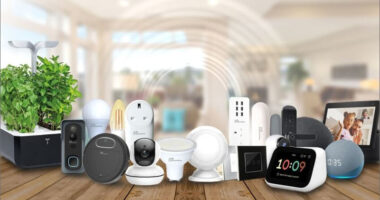
In 2026, the “Ecosystem Wars” have largely subsided thanks to the universal adoption of Matter 1.5. This protocol ensures that your Apple HomePod, Amazon Echo, and Google Nest Hub can all communicate with the same light bulbs and locks without compatibility headaches. The modern central hub is often a multifunctional device, like the Aqara Thermostat Hub W200, which acts as a wall-mounted control panel, a climate controller, and a Matter bridge all in one. These hubs now utilize “Local AI,” meaning your automation routines—like turning on the lights when you unlock the door—happen instantly without needing to send data to the cloud. This shift significantly improves both speed and cybersecurity getting much stronger across your entire home network.
Climate Control: AI-Powered Energy Management
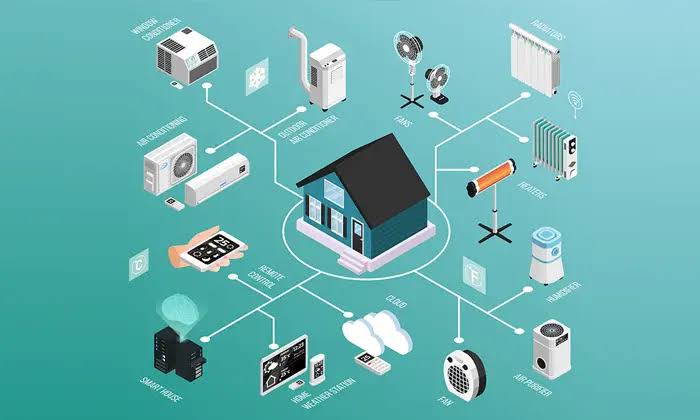
Climate automation has evolved from simple scheduling to “Predictive Comfort.” Devices like the Nest Learning Thermostat Gen 4 and the Ecobee Eco+ now integrate with real-time weather data and “Clean Energy Guidance” to adjust your home’s temperature when electricity is cleanest or cheapest. These systems learn the thermal properties of your specific home—how long it takes for the living room to cool down or heat up—and adjust accordingly. As ai assistants making life easier for homeowners, these thermostats can automatically switch to “Away Mode” by detecting the location of your smartphone or through ultra-wideband (UWB) presence sensors, ensuring you never pay to heat an empty house.
Autonomous Security: Beyond Simple Motion Alerts
The security systems of 2026 are focused on reducing “notification fatigue.” Traditional cameras sent alerts for every passing car; modern devices like the Aqara Camera Hub G350 use on-device AI to differentiate between family members, pets, and unknown intruders. These cameras feature dual-lens systems for high-fidelity zoom and 4K wide-angle views, all while keeping data processing local for privacy. Combined with smart locks like the Yale Assure Lock 2, your home can now offer “Hands-Free Entry,” where the door unlocks as you approach with your phone in your pocket. Using ai agents explained functions types, these systems can even manage guest access automatically, sending a one-time digital key to a delivery person or a friend based on your calendar events.
Adaptive Lighting and Circadian Rhythms
Lighting is no longer just about “on” or “off.” Smart lighting systems like Philips Hue and GE Cync now support “Circadian Automation,” which adjusts the color temperature of your lights throughout the day to match your body’s natural clock. In the morning, lights shift toward cool, blue tones to increase alertness; in the evening, they transition to warm, amber hues to prepare you for sleep. This isn’t just a gimmick; it is a core part of technology shaping human evolution as we optimize our indoor environments for better health. Automation routines can now “follow” you through the house, using motion and presence sensors to light only the rooms you are currently occupying, significantly reducing energy waste.
The Intelligent Kitchen: AI Sous-Chefs and Inventory
The kitchen has become the most “interactive” part of the automated home. Standout devices like the GE Profile 4-Door French-Door Refrigerator feature built-in barcode scanners and internal cameras that automatically track your groceries. This “Kitchen Assistant” creates shareable shopping lists in real-time as you use up items. When it comes to cooking, smart ovens now use AI-powered vision to identify the food you’ve placed inside and automatically set the correct temperature and duration. As ai tools changing modern workflows enter the domestic sphere, your fridge can even suggest recipes based on what’s currently in your crisper drawer, helping to eliminate food waste and simplify meal planning.
Wellness Sensors and Environment Monitoring
A new category of automation for 2026 is “Environmental Wellness.” Devices like the SwitchBot Meter Pro CO2 and the Eufy Water Sensor monitor air quality and potential leaks around the clock. If CO2 levels rise too high in your home office, the system can automatically trigger your HVAC fan or open a smart window to bring in fresh air. Similarly, wearables tracking smart activities can now sync with your home; if your smartwatch detects you are having a restless night, it can signal your smart thermostat to drop the room temperature by one degree for better sleep. This level of “Context-Aware” automation ensures your home is actively working to improve your physical and mental well-being.
Choosing the Right Ecosystem for Your Home
While Matter has made devices more interoperable, choosing a “Lead Assistant” (Alexa, Google, or Siri) still matters for the user experience. Amazon Alexa remains the leader in sheer device compatibility and affordable hardware like the Echo Dot Max. Google Home is favored for its intuitive app and superior natural language processing, making it the best for complex voice queries. Apple HomeKit continues to set the gold standard for privacy and deep integration with the iPhone/Apple Watch ecosystem. Using smart devices learning from you, each of these platforms is becoming more agentic, meaning they can suggest new automations based on the devices you add and how you use them over time.
Conclusion
The smart home of 2026 is a quiet, helpful companion that operates mostly in the background. By investing in Matter-compatible hubs, AI-driven climate controls, and autonomous security systems, you are building a home that is more energy-efficient, safe, and comfortable. The key to successful automation is to start with the “Big Three”—Lighting, Climate, and Security—and expand into specialized sensors as you become more comfortable with the technology. As ai tools to study faster and manage complex data become more accessible, the barriers to setting up a “Predictive Home” have never been lower. Whether you are looking to save money on your utility bills or simply want the convenience of a door that unlocks itself, the automation tools available today provide a seamless bridge to the future of domestic living.
References and Further Reading:
HomeKit News: CES 2026 Smart Home Highlights |
Security.org: Best Smart Home Devices of 2026 |
CNET: Top Home Automation Upgrades for 2026