
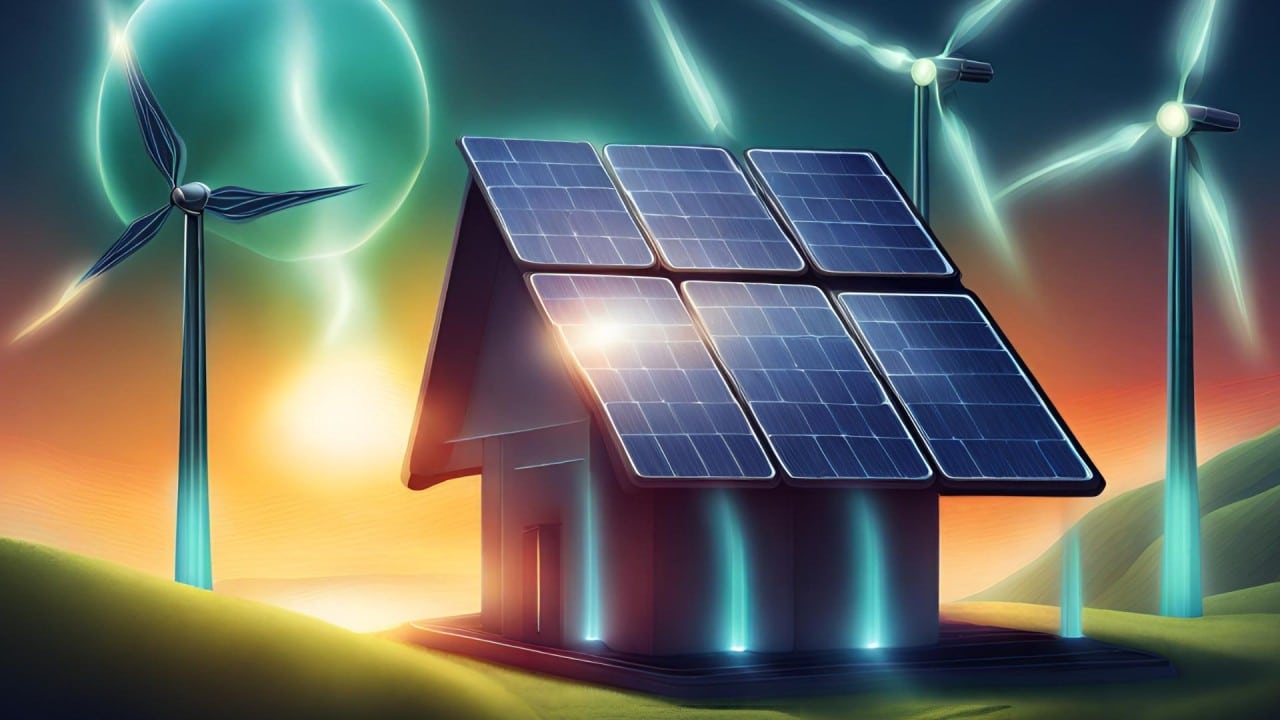

The Decisive Decade: Technology’s Role in Mitigating Climate Change in 2026
Table of Contents
1. AI as the Efficiency Engine: Optimizing the Energy Grid
2. Carbon Capture, Utilization, and Storage (CCUS) at Scale
3. The Hydrogen Reset: Decarbonizing Heavy Industry
4. IoT and the Circular Economy: Eliminating Resource Waste
5. Climate-Smart Agriculture and Precision Fermentation
6. From Mitigation to Adaptation: Predictive Disaster Tech
7. Radical Transparency: Blockchain and Satellite Monitoring
8. The AI Paradox: Balancing Computing Power with Green Goals
9. Conclusion
AI as the Efficiency Engine: Optimizing the Energy Grid
In 2026, the most immediate impact of technology on climate change is found in the “invisible” optimization of our energy systems. As renewable energy sources like wind and solar provide an increasing share of the global power mix, their inherent intermittency poses a challenge to grid stability. Artificial Intelligence has stepped in as the primary coordinator, using machine learning algorithms to forecast weather patterns and consumer demand with microsecond precision. These AI-driven smart grids can dynamically shift energy loads, manage large-scale battery storage facilities, and even utilize bi-directional charging from electric vehicle fleets to balance the system. Using ai tools changing modern workflows for utility operators, these systems have reduced energy waste by up to 15%, ensuring that clean energy is never curtailed simply because the grid wasn’t ready to receive it.
Carbon Capture, Utilization, and Storage (CCUS) at Scale
While reducing emissions is the priority, 2026 has seen a massive surge in the deployment of Carbon Capture, Utilization, and Storage (CCUS) technologies to address “hard-to-abate” sectors like cement and steel production. Unlike earlier experimental phases, current CCUS hubs are now capturing millions of tonnes of CO2 directly from industrial smokestacks and sequestering it in depleted oil reservoirs or saline aquifers. Furthermore, the “utilization” aspect is gaining traction, with companies converting captured carbon into sustainable aviation fuel (SAF) and carbon-negative building materials. As technology shaping human evolution drives us to rethink our relationship with waste, carbon is being rebranded from a pollutant into a valuable industrial feedstock, creating a circular carbon economy that was once thought to be a century away.
The Hydrogen Reset: Decarbonizing Heavy Industry
Hydrogen technology has undergone a “strategic reset” in 2026. After years of hype, the industry has narrowed its focus toward “Green Hydrogen”—produced via electrolysis using renewable electricity—specifically for heavy transport and high-heat manufacturing. We are seeing the first operational “Hydrogen Valleys” where production, storage, and industrial use are co-located to minimize transport losses. This is critical because certain processes, such as the production of ammonia for fertilizer, cannot be easily electrified. Using ai assistants making life easier for chemical engineers, new catalysts and membrane materials are being discovered at an accelerated pace, driving down the cost of green hydrogen and making it a viable competitor to fossil-fuel-based “Grey Hydrogen” for the first time in history.
IoT and the Circular Economy: Eliminating Resource Waste
The Internet of Things (IoT) has become the central nervous system of the circular economy in 2026. By embedding low-power sensors into products and packaging, manufacturers can now track the entire lifecycle of a material, from raw extraction to end-of-life recycling. This “Digital Product Passport” ensures that valuable materials like lithium, cobalt, and rare earth metals are recovered rather than sent to landfills. In cities, IoT-enabled waste management systems use automated sorting to separate organic waste for composting or methane capture. As smart devices learning from you and your consumption habits, these systems provide data-driven insights that help businesses and consumers reduce their material footprint, proving that efficiency is one of the most powerful tools in the climate mitigation toolkit.
Climate-Smart Agriculture and Precision Fermentation
Agriculture is a major contributor to greenhouse gas emissions, particularly methane. In 2026, technology is tackling this through a two-pronged approach: precision farming and alternative proteins. “Climate-Smart” tractors and drones use multispectral imaging to apply fertilizer only where needed, preventing the runoff and nitrous oxide emissions associated with over-fertilization. Simultaneously, precision fermentation—using microorganisms to produce real animal proteins without the animal—is beginning to scale. This technology has the potential to drastically reduce the land and water required for food production. Using ai tools to study faster and simulate protein folding, biotech firms are creating sustainable alternatives that are indistinguishable from traditional dairy and meat, offering a path to feed a growing population without destroying more of the planet’s carbon-sinking forests.
From Mitigation to Adaptation: Predictive Disaster Tech
In 2026, there is a growing realization that mitigation alone is no longer enough; we must also adapt to the changes already in motion. “Resilience Tech” has become a major investment sector, focusing on predictive modeling for floods, wildfires, and extreme heat. High-resolution satellite constellations provide real-time Earth observation data, allowing governments to move populations and reinforce infrastructure before a crisis hits. Digital twins of entire cities are being used to simulate rising sea levels and design more effective urban cooling solutions. As wearables tracking smart activities and biometric data help individuals stay safe during heatwaves, the integration of climate data into our daily lives is helping humanity navigate a more volatile environment with greater foresight and less loss of life.
Radical Transparency: Blockchain and Satellite Monitoring
One of the biggest hurdles to climate action has been the lack of verifiable data. In 2026, blockchain technology is being used to create immutable “Carbon Ledgers” that prevent double-counting of carbon credits and ensure that corporate net-zero claims are backed by reality. Satellite-based sensors can now detect methane leaks from space with meter-level accuracy, making it impossible for oil and gas companies to hide fugitive emissions. This radical transparency is shifting the power dynamic, as investors and regulators can now see exactly where emissions are coming from in real-time. Using ai agents explained functions types to audit these massive datasets, the financial world is finally able to accurately price climate risk into the global market, rewarding sustainable companies and penalizing laggards.
The AI Paradox: Balancing Computing Power with Green Goals
The year 2026 has also brought a sober reflection on the “AI Paradox”: the very technology we use to save the planet requires an immense amount of energy and water to operate. Data centers are now significant drivers of electricity demand, leading to a renewed push for “Green AI.” This involves developing more efficient neural architectures that require less compute power and locating data centers in regions with abundant geothermal or hydro energy. Some tech giants are even deploying on-site modular nuclear reactors to power their AI clusters sustainably. As cybersecurity getting much stronger protects these vital energy assets, the industry is working toward a “Net-Positive” AI model, where the carbon savings generated by AI’s optimizations far outweigh the emissions created by its training and inference.
Conclusion
As we stand in 2026, the role of technology in mitigating climate change has evolved from speculative hope into a functional necessity. We are seeing a powerful synergy between AI, renewable energy, and industrial innovation that is beginning to bend the emissions curve. While the challenges remain immense—particularly in balancing the energy demands of our digital world with our ecological limits—the tools at our disposal are more sophisticated than ever before. The transition to a sustainable future is no longer just a political ambition; it is an engineering reality. By continuing to refine these technologies and ensuring they are deployed equitably across the globe, we can build a resilient, low-carbon civilization that thrives in harmony with the natural world. The tech of 2026 has given us the blueprint; the task now is to keep building.
References and Further Reading:
ICL Group: Climate Tech Trends 2026 |
StartUs Insights: Top 10 Emerging Climate Tech Trends |
Optera: AI’s Impact on Energy and Climate in 2026