
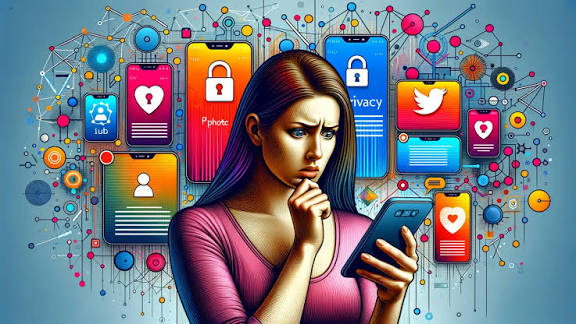

AI and Privacy Concerns: Is Our Data Still Safe?
Artificial Intelligence is rapidly changing the world, powering smart assistants, self-driving cars, face recognition, search engines, chatbots, smart homes, and business automation. While AI makes life easier, it also raises a major question: is our personal data safe? As AI becomes smarter, it collects more information from users, and that has created serious privacy concerns around the globe.
AI systems learn through data — photos, voice commands, browsing activity, location history, messages, search keywords, health trackers, and camera input. The more data AI collects, the better it becomes. But this leads to one of the biggest debates in technology today: How much of our privacy are we losing?
How AI Collects Personal Data
AI-powered services are connected to almost everything we do. Everyday tools collect information, even when we don’t realize it.
- Smartphones track location, usage, apps, and browsing
- Smart speakers listen for voice commands
- Social media analyzes posts, likes, messages, and photos
- Smart cameras use facial recognition
- Health wearables track heart rate and movement
AI needs this data to learn patterns and respond better. However, the hidden problem is: Who controls that data? And what do companies really do with it?
Related reading: Smart Devices Learning From You
Why Privacy Matters in the AI Era
Privacy is not just about hiding secrets — it is about personal freedom and safety. When AI systems have access to your digital identity, it opens the door to:
- Tracking behavior without consent
- Data selling to advertisers
- Incorrect predictions about users
- Government surveillance
- Cyberattacks stealing personal information
Even innocent information can be used to predict income, location, interests, health conditions, or political views. This is why experts warn that privacy laws must evolve faster than the technology itself.
The Biggest AI Privacy Concerns Today
1. Facial Recognition
AI-powered cameras can identify people in public spaces — at airports, malls, or streets. While this helps with security, it also raises concerns of mass surveillance and the possibility of tracking citizens without permission.
2. Voice Assistants Listening
Smart speakers like Google Home, Siri, and Alexa record voice data. Companies claim recordings are used for improving AI accuracy, but several investigations revealed some private conversations were stored on servers and reviewed by employees.
3. Data Selling and Advertising
Many social platforms and apps collect user behavior to sell targeted advertising. AI can detect what users like, need, or might buy — sometimes better than the users themselves.
Related article: How AI Is Transforming Digital Marketing
4. AI Predicting Personal Behavior
AI can analyze a person’s browsing habits and predict mood, personality, and decisions. Some algorithms can detect depression, stress, or major life changes through smartphone data alone.
5. Deepfakes and Identity Theft
AI can now create realistic fake videos, cloned voices, or synthetic images — which can be used for fraud, misinformation, or impersonation. Criminals can steal identities without ever seeing the victim.
Are Companies Using Data Responsibly?
Technology companies say data is used only for service improvement, but several scandals prove otherwise. The Cambridge Analytica case, for example, secretly collected data from millions of Facebook users and used it to influence elections.
This incident changed global awareness and caused governments to introduce newer data protection laws.
How Governments Respond
Many countries have created privacy laws to control how data is collected and used. These include:
- GDPR – Europe’s strict privacy law
- CCPA – California’s consumer data protection rule
- DPA – Data Protection Acts in multiple countries
These laws give users rights like:
- Requesting a copy of their data
- Asking for data deletion
- Blocking companies from selling data
- Requiring consent before tracking
Can AI Be Used Without Breaking Privacy?
Yes — if data protection is taken seriously. Modern solutions include:
- Edge Computing – processing data locally instead of sending to cloud
- Data encryption – securing information from hackers
- Anonymous learning – training AI without storing personal identity
- Permission-based tracking – users must agree before data is collected
Learn more: Rise of Edge Computing
Industries Most Affected by AI Privacy Issues
- Healthcare – sensitive medical records
- Banking – financial identity and transactions
- Education – student data tracking
- Smart homes – camera and audio access
- Marketing – personal habits and behavior
Just one breach can leak millions of user accounts, passwords, or medical files. This makes cybersecurity more important than ever.
Read also: Why Cybersecurity Awareness Is More Important Than Ever
How Users Can Protect Themselves
- Use strong and unique passwords
- Turn off unused permissions on apps
- Disable microphone/camera access if not needed
- Use VPN for secure browsing
- Limit social media information sharing
Recommended: Benefits of Using VPNs in 2025
The Future of AI and Privacy
AI will continue growing, but privacy debates will also grow. In the future, we may see:
- AI systems that delete data automatically
- More laws protecting personal information
- Devices designed for privacy first
- Decentralized data storage
Artificial Intelligence is powerful — but power must come with responsibility. If used properly, AI will improve the world without harming privacy. But if misused, it can become the most dangerous technology ever created.
Final Thoughts
AI brings innovation, convenience, and smarter decision-making — but the price cannot be personal freedom. Users must stay informed, companies must be transparent, and governments must enforce strong data protection. The future of technology should not sacrifice human rights.
The debate of “AI vs Privacy” is not about choosing one side — it’s about finding balance. The world needs smart technology, but it also needs safe technology. And that balance will define the digital future.